
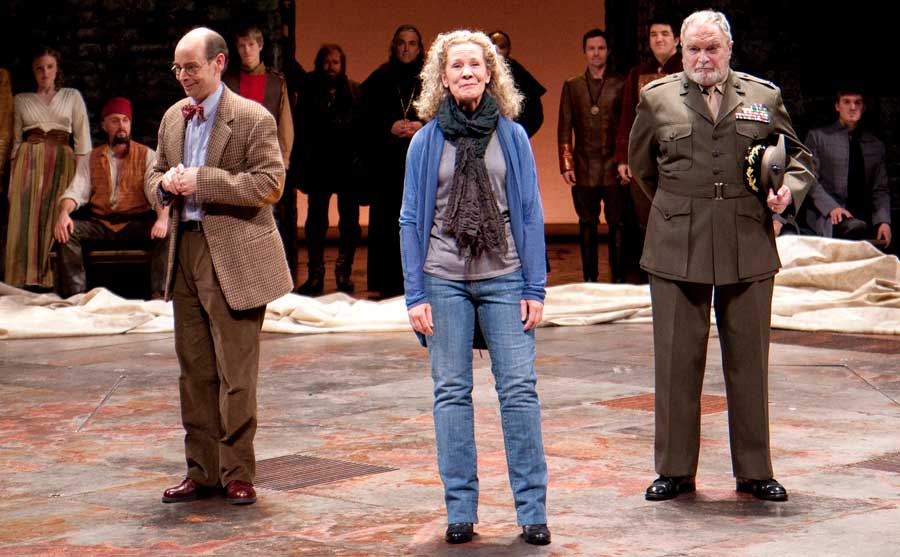
Rogue Theater Company Artistic Director Jessica Sage answers your theater questions
By Jessica Sage
Dear Jessica,
I can imagine why a specific actor would seem ideally suited to a particular role, but I’ve always wondered: How do you match directors to plays, especially complex ones?
— Carole F.
Dear Carole,
That’s a great question, Carole.

Collaboration is bedrock at Rogue Theater Company (RTC), and complex plays require collaboration between the director, cast and creative team. We often have a week of table work during which we analyze the plots, character development and thematic nuances of the play before the actors get on their feet. Ultimately, a director’s passion, insight and overall fit with the project can make a significant difference in the success of a complex play. The key is to find a director who not only appreciates the complexity of the play but also has the skills and vision to bring its intricacies to life on the stage.
I cannot emphasize enough how grateful I am for the plethora of talented artists with whom I am privileged to work. Matching directors to complex plays involves a thoughtful and thorough process that takes into account various factors, including the director’s artistic vision, experience, style, and the specific challenges presented by the complexity of the material.
Several artists — Caroline Shaffer, Michael J. Hume, and Robynn Rodriguez — have directed at Rogue Theater Company (RTC) multiple times. I trust them implicitly and am confident in their ability to direct any play we choose. Other directors we have hired — Christine Albright, Penny Metropulos and Liisa Ivary — also have proven track records and are extraordinarily accomplished. Directors read a chosen play multiple times to gain a deep understanding of its themes, characters, plot and underlying messages. They identify the complexity factors, such as nonlinear narratives, intricate character relationships, symbolism and thematic layers. Most importantly, they bring a fresh perspective and innovative approach to the material while staying true to its essence.
Dear Jessica,
Please explain the subtle differences between stage and screen acting. Do you have any related anecdotes?
— Ann M.
Dear Ann,
I know of no one more qualified to provide an answer than Anthony Heald, who was delighted to oblige. Here’s Tony’s response:
“When you’re working in front of a camera, you work from moment to moment. The typical workday concentrates on several key moments in one or two scenes that take place in the same location or on the same set. The process consists of staging, lighting and shooting the scene and its context. Usually the initial set-up is a ‘wide shot’, providing the audience with a sense of the scene’s geography of the scene. Then ‘medium shots’ establish the physical relationships of the characters and, finally, ‘close-ups’ zero in on specific characters as they exist and behave.
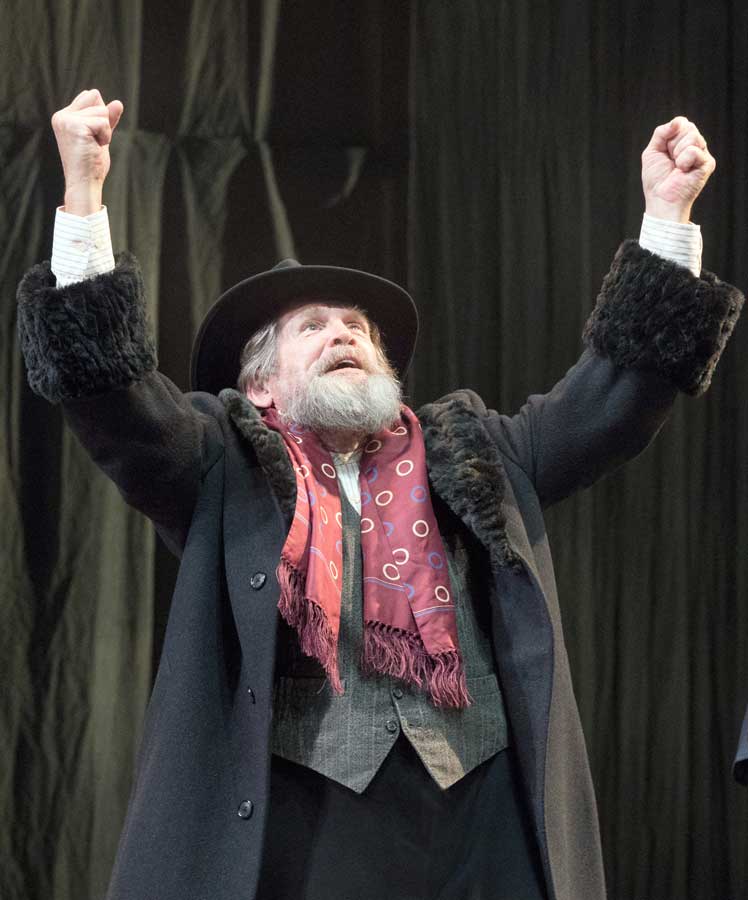
“The actor’s challenge is to find a character’s truthful behavior amidst the chaos of scores of technicians preparing the shot. The actor must maintain a bubble of concentration within which they create for themselves a separate reality and carefully nurture the truth of each moment through repeated ‘takes.’ Each take must have the appearance of happening for the first time, even though the director may require dozens of takes of the same moment, offering various specific adjustments to the actor as they provide a filmed record of a moment of behavior. “And the hard reality is that once a scene or a moment has been staged, lit and shot, it’s ‘in the can’ and will never be explored by the actor again. The experience of driving home after a day spent concentrating on a scene, and suddenly realizing a new truth or a better choice, and knowing there will be no opportunity to go deeper because you’re done with that scene — that, to me, is the downside of film acting.
“Preparing a stage performance is radically different. Each new truth you discover can be interwoven with the other truths previously discovered, in a process of going deeper and deeper into each moment of every scene. And those moments aren’t isolated, as in film work, but flow each into the next, building to a complex totality that can be repeatedly explored. That to me is the upside of stage acting.”
Thanks, Tony!
Theater lovers, what would you like to know about theater, acting, stagecraft, etc.? Send your questions to contact@roguetheatercompany.com. Bring up the houselights, and let’s have some fun!
Jessica Sage is artistic director of Rogue Theater Company (roguetheatercompany.com).


