The project would be a first for Oregon
By Shaun Hall, Rogue Valley Times
Plans are moving along for a wide, landscaped wildlife overpass spanning Interstate 5 about 2 miles north of the California-Oregon border.
The Oregon Department of Transportation earlier this year agreed to spend $1.5 million toward design of the crossing, and the agency in August applied to the U.S. Department of Transportation for a grant to build it, at an estimated cost of $20 million.
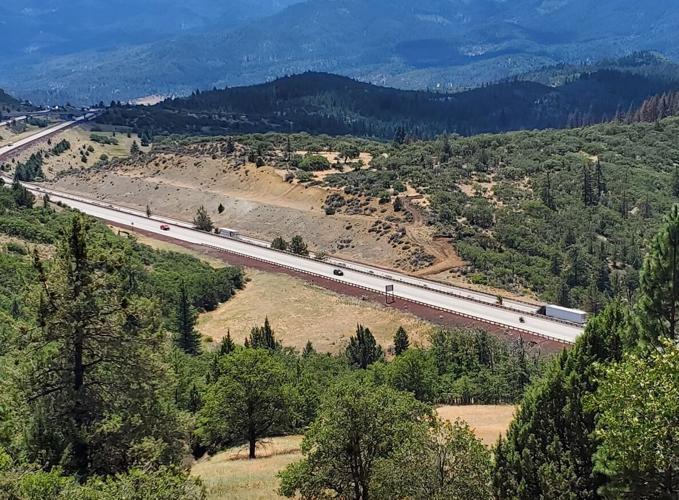
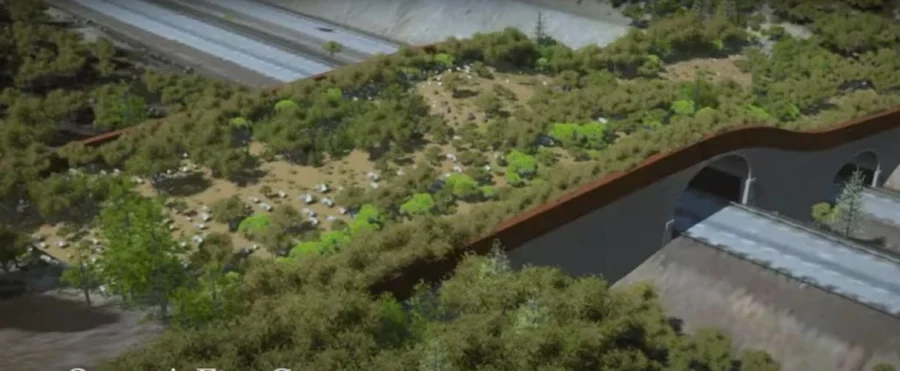
The overpass would be a first for Oregon and for I-5 between Mexico and Canada. Proponents say it would reduce vehicle-animal collisions and connect habitat areas within the Cascade-Siskiyou National Monument.
‘They don’t know they’re on a bridge’
The proposed crossing, near milepost 1.7, would be anchored on federal land along both sides of the freeway, at a 222-acre botanical area known as the Mariposa Preserve, which is managed by the U.S. Bureau of Land Management. The overpass might be 200 feet wide or more and appear natural to animals, which would be shielded from lights, vibration and views of traffic below.
“They don’t know they’re on a bridge,” said Amy Amrhein, a project coordinator with the private Southern Oregon Wildlife Crossing Coalition.
The possibility of federal funding under the Infrastructure and Jobs Act of 2021 is spurring the push to make things happen, but there’s competition from other projects. The funding opportunity, coupled with a continuing desire to improve habitat connectivity while reducing vehicle-wildlife crashes, have come together to make the project a priority.
“We feel it’s critically important,” said Amrhein, a former aide to Sen. Jeff Merkley.
I-5 severs wildlife connections
Amrhein, who is volunteering her time, said she took on the project as a personal mission. Also helping to coordinate the push for the crossing is Jack Williams, a retired head scientist for Trout Unlimited and former supervisor of the Rogue River-Siskiyou National Forest.
“We are doing this as our retirement gigs,” Amrhein said. “I do a lot of the organizing and fundraising. Jack is really the scientist.”
Amrhein is a longtime Ashland resident who recently moved to Washington state to be close to family. Williams lives outside Medford. He said the monument serves as a wildlife corridor that connects regions, but that I-5 slices through the monument, creating a barrier. Wildlife corridors allow animals to access winter and summer ranges and to find mates.
“Here you’ve got I-5 running north-south and just severing those connections,” Williams said.
‘A treacherous area’
The crossing site is a couple miles south of the I-5 Siskiyou Summit, where the freeway crosses an east-west range of mountains known as the Siskiyou Crest. That range serves as a connection between coastal mountains and the Cascade Mountains.
Eight sites between Ashland and the border were considered, with the Mariposa Preserve site deemed the biggest priority based on “funding and constructability,” according to ODOT’s project page.
The proposed site contains the most diverse number of animals of all the sites, according to Williams, who said a diverse ecosystem is a strong ecosystem. He also said he was very concerned about the need for a crossing north of the summit.
The Mariposa site currently has a 5-foot culvert that carries a creek under the freeway, but the pipe is considered too long and narrow for the use of wildlife that is attracted to the waterway, including deer, bear and elk. The creek has been identified by BLM as a high priority beaver reintroduction site.
According to Amrhein, ODOT wanted to leave the roadbed alone and not tunnel under the freeway to make a wildlife crossing.
“An underpass would have been really expensive,” she said.
The crossing would be for wildlife, not humans.
“This is not something we want humans to even get close to,” she said.
Federal money is driving force
A fence would funnel animals toward it. There’s been discussion about artwork associated with the bridge, which would be of the concrete arch design. There’s no proposed name for the structure.
The project has support from several agencies, organizations and individuals, plus financial support from the Oregon Legislature, which allocated $7 million last year for wildlife crossings under House Bill 4130-1. Money from that legislation, $1.5 million, is now being used by ODOT to partially design the crossing at the preserve. Total engineering, design and planning costs could run $3.5 million, in addition to the $20 million for construction.
In August, ODOT applied to the USDOT for a grant to fund construction, which could start as early as 2025. The Infrastructure Act funds a USDOT wildlife crossing pilot program that aims to reduce wildlife-vehicle collisions on federal and state highways.
“The federal money is such an opportunity, it became a driving force,” Williams said.
The support from the Legislature was important to help move the project forward, according to Amrhein. In addition, the coalition did its own fundraising, taking in $130,000 in public and private money to pay for consulting work on a feasibility study and conceptual report. Consultants included River Design Group of Corvallis and Samara Group of Portland.
Oregon state Rep. Pam Marsh supports the project and helped pass last year’s legislation. She said hunters, biologists and transportation safety proponents support wildlife crossings.
“Our specific proposal is just fabulous,” she said, referring to the Mariposa crossing. “Wildlife crossings is one of those issues we can come together on.”
“I-5 and the summit is such a treacherous area.”
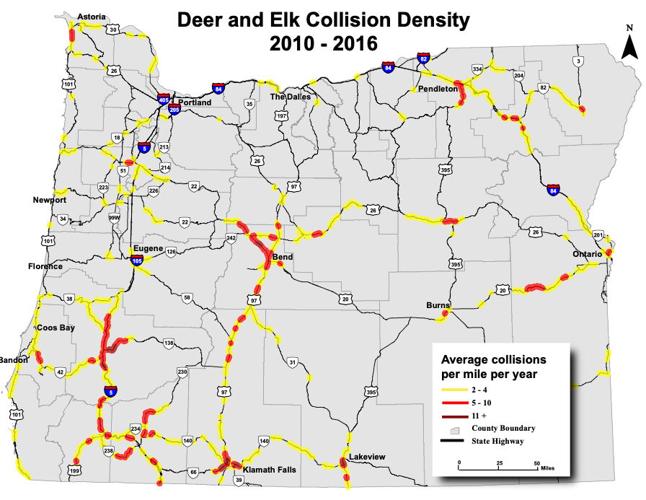
In a five-year period beginning in 2016, the section of freeway between Ashland and the border had 200 documented wildlife-vehicle collisions, including 159 deer, five bears and one cougar, according to the coalition. Other locations in the state have higher crash rates, but proponents of the Mariposa crossing project got a jump on matters and lined up support, giving them the opportunity to pounce when the federal money came available.
“We raised the money to get this moving,” Amrhein said. “We are the ones that got the conceptual (report) done.”
ODOT spokeswoman Julie Denney said there are multiple wildlife crossing studies ongoing in Oregon. There are currently six wildlife undercrossings in the state, including five under Highway 97 and one under Highway 20. Their construction led to an 86% decrease in vehicle-wildlife collisions, according to the agency. According to ODOT, the average cost in medical bills, property damage and related costs per crash is $9,000 involving deer and $24,000 involving elk.
Other states are ahead of Oregon when it comes to building wildlife crossings, according to Williams.
“We probably should have been doing more of this,” he said.
If the crossing gets built, Williams thinks it will make a statement.
“We care about wildlife and we care about people,” he said.
For more information, visit the coalition’s website, myowf.org/sowcc, call Denney at 503-949-2366 or go to ODOT’s project page, oregon.gov/odot/projects/pages/project-details.aspx?project=23100.
Reach Rogue Valley Times outdoors and environmental reporter Shaun Hall at 458-225-7179 or shall@rv-times.com. This story first appeared in the Rogue Valley Times.