Southern Oregon and Northern California impacts reviewed in talk presented by OSU’s Sustainable Living series
By Lee Juillerat for Ashland.news
People in Southern Oregon and far Northern California will likely see ongoing changes in weather patterns in coming years, and those changes aren’t necessarily positive.
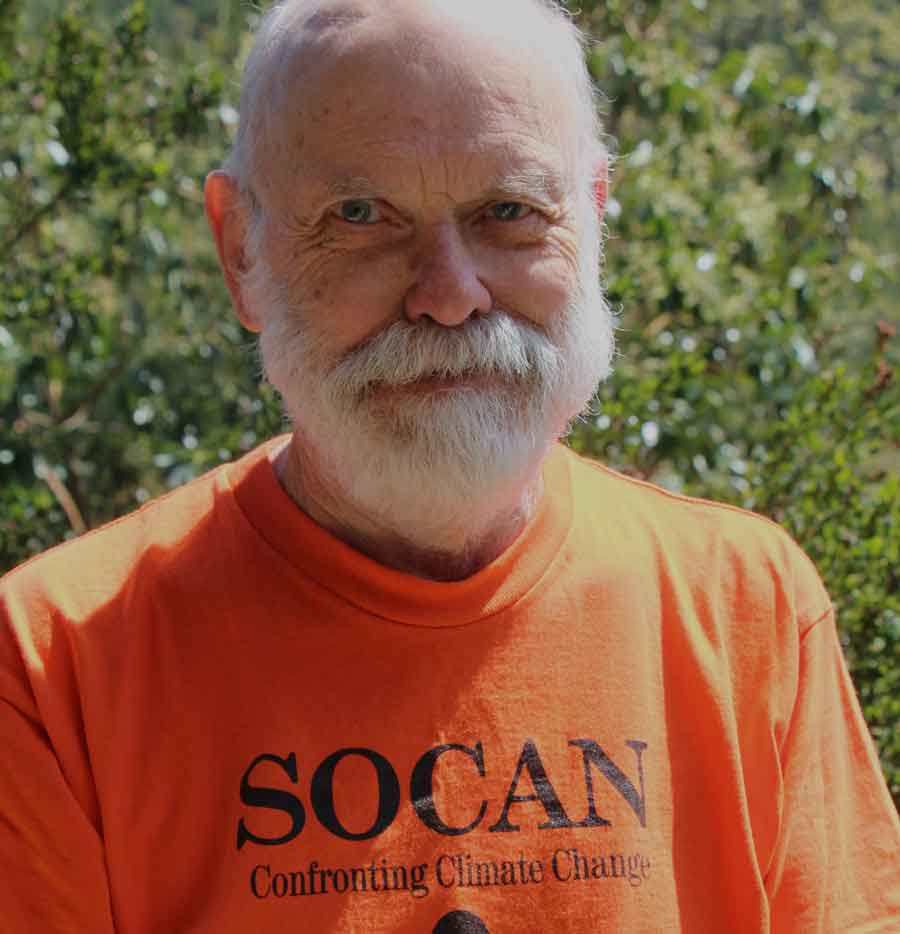
During a Wednesday evening presentation, “Southern Oregon Climate Trends, Projections, and Consequences,” Dr. Alan Journet, co-facilitator of Southern Oregon Climate Action Now (SOCAN), offered a series of possible scenarios if steps are not taken to immediately stop or at least slow climate change.
“The future is in our hands,” Journet said during the program, presented as part of the Oregon State University Living on the Land Steward Program’s Sustainable Living series.
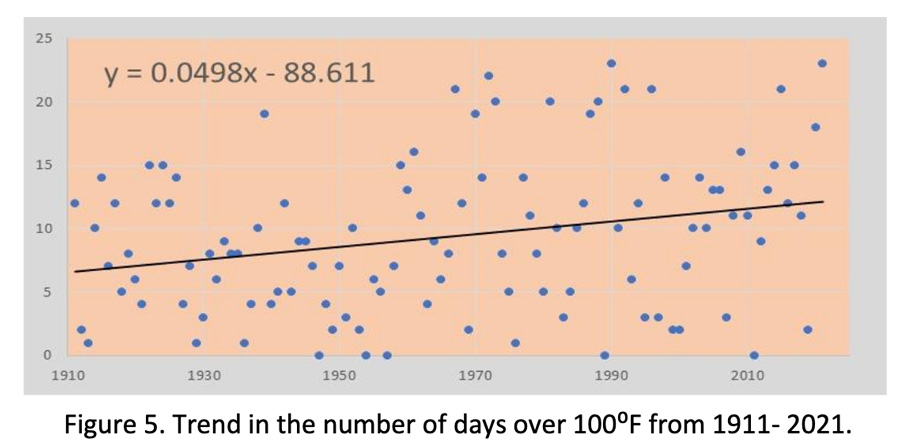
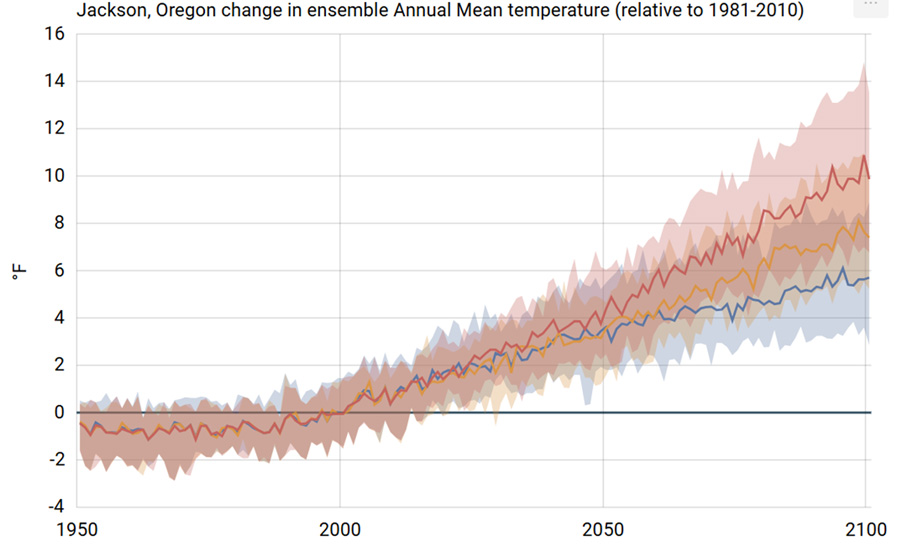
Among future concerns cited by Journet are projections indicating that temperatures in Jackson County and neighboring counties will rise. “The likelihood is something like a 10-degree Fahrenheit increase compared to 1980,” he said of a worst-case scenario, which he said is if we continue to proceed with “business as usual.”
During the two-hour program, held in person at the Oregon State University Extension Office in Central Point and on Zoom, Journet used a series of charts and graphs to illustrate climate-related trends that are influencing regional residents now and in the future. Those changes include increasing shifts in seasonal weather patterns that will impact atmospheric greenhouse emissions, create longer periods of hot and dry weather, adversely impact soils and moisture retention, and continue the extinction of various animal and plant species.
While the charts showed areas of concern throughout North America, including the Western U.S., as trending in a negative direction, Journet noted the predicted world-wide impacts of climate change are especially severe and devastating elsewhere, especially in Africa and South America.
In the Rogue Valley, Journet said current trends indicate that rain will fall more frequently in heavy downpours, “not gentle showers that benefit the soil,” and result in damaging soil erosion. He said weather trends indicate slightly wetter winters, slightly drier summers, with precipitation increasingly falling as rain instead of snow at higher elevations. Along with impacting agriculture, those shifts, which are already occurring, will increasingly impact forested areas, including the nearby Cascades, and increase the likelihood of larger, more intense forest fires.
According to Journet, factors increasing the risk of wildfires include early snow melt and warmer seasonal weather, which reduces late season water runoffs that benefits soil and vegetation. He said the difference between a bad and average fire season is 1.8 degrees F and that fire season in the Western U.S. is now 105 days, or three months longer than in the 1970s.
Journet compared the Almeda and Bootleg fires in Southern Oregon to the ongoing fires devastating Southern California. “The firestorm that hit the Rogue Valley in 2020 upending so many lives is being emulated on a larger scale in Los Angeles. It should escape the attention of none of us that such events are exacerbated by the climate change that global warming is inducing. The trends,” he said, “are clear. The projections do not guarantee what our future is likely to hold, but they offer a cautionary tale that we ignore at our peril.”
Among Journet’s charts were some from the Oregon Department of Forestry from 1911 to 2022 showing that more acres are burning in Oregon while other encompassed the Western U.S. Both indicate that larger wildfires have increased since the 1940s. Tree rings and bore samples show historically longer intervals between forest fires.
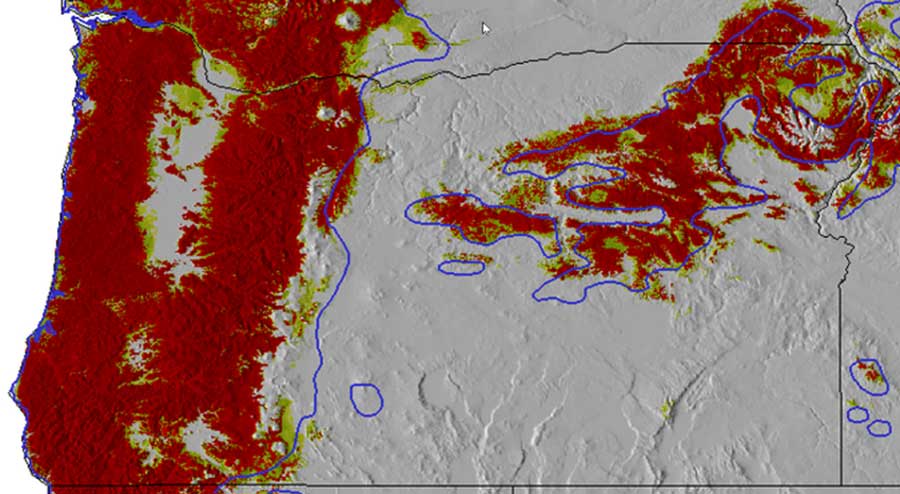
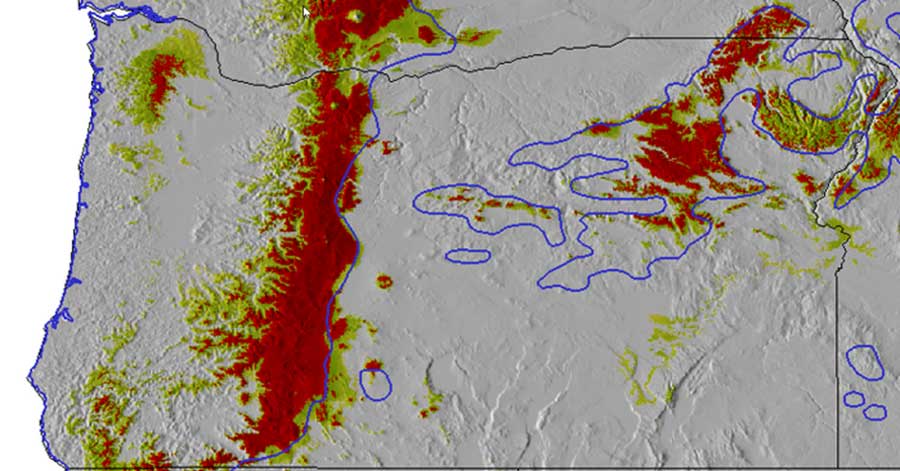
Other charts showed forestry implications. Douglas fir, now in abundance west of the Cascades, could be reduced by about two-thirds by the end of the century while Ponderosa pine could be limited to small pockets east of the Cascades. Even more drastic losses are possible for lodgepole pine, Sitka spruce, Western hemlock, Englemann spruce, subalpine fir, Western juniper, and Pacific madrone.
He said climate change is already affecting grape growing in the Rogue Valley, which is resulting in shifting from riesling, pinot noir and chardonnay grapes to tempranillo, malbec and syrah grapes that better tolerate warmer temperatures.
On a semi-positive note, he said data on electrical sources between 2013 and 2024 shows the U.S. is slowly moving away from using coal while the use of natural gas and renewal energy has slightly risen. The use of nuclear power is little changed.
According to Journet, general implications indicate, “If we don’t divert our global climate trajectory a sustainable future will not be an option.” He said concerned people should support the “Right to a Healthy Environment Amendment” proposed by Oregon Sen. Jeff Golden, whose district includes Ashland and other areas of Southern Oregon.
Journet offered “Three Additional Actions to Consider,” including learning more about the science of global warming and climate change consequences through a 10-week SOU course, “Living with Climate Change in the Rogue Valley,” that will be offered to students and community member beginning in April. (For information visit socan.eco/lwcc.)
He also encouraged attendees to “get off fossil fuels” by electrifying travel and domestic appliances (information at socan.eco/why-electrify/), and through the SOCAN team contact the Oregon Legislature through socan.eco/portfolio-item/federal-state/.
“If we don’t divert the current global climate trajectory,” Journet said, “a sustainable future is not likely.”
Email freelance writer Lee Juillerat at337lee337@charter.net.