The myth of journalistic objectivity
“Where one sits determines what one sees.”
— David Goatley, Research Professor of Theology and Black Church Studies, Duke Divinity School
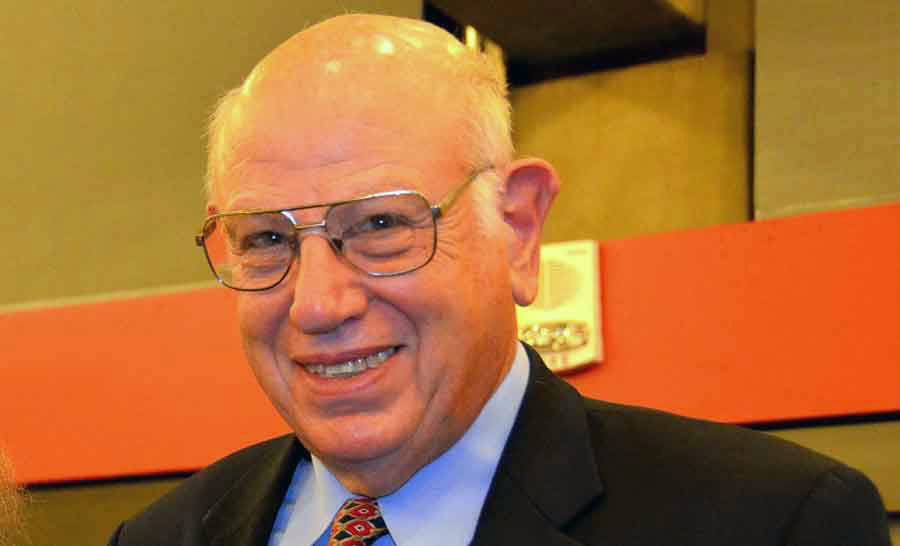
By Herbert Rothschild
Those of us who started Ashland.news did so because this city no longer had an equivalent of a good hometown newspaper. Only for a brief time during the last decade did the Daily Tidings merit that designation. That time ended when Steven Saslow purchased the papers from GateHouse Media and eventually scrapped the Tidings altogether.
There was another reason for discontent besides the end of local news coverage, although that loss was the more important. People were also unhappy with Saslow’s right-wing politics and his decision, last year, to insert himself more than previously into the content management of his two papers, purportedly to guarantee their journalistic objectivity. In the Feb. 28, 2021, Mail Tribune, he said he would take part in deciding what opinion pieces to publish, and would ride herd on reporters whom he deemed to have injected their personal bias into their news stories.
I take Saslow’s averred motive for these decisions at face value, and all of us associated with Ashland.news are committed to unbiased reporting. Yet, while objectivity is the goal, in truth it’s an unattainable one.
Some journalistic bias is blatant. If a reporter covers a trial and says that the case for the defense was weak, there are few editors who wouldn’t demand a rewrite. Or if an ABC national news anchor called the current hearings into the events of January 6 simply Democratic grandstanding, that would end her career at the network.
These are easy cases, but let’s press harder. First, consider how entities are referred to in stories reporting on them. For example, is the entity carried by a pregnant woman called the child, the fetus, the unborn, the unborn baby? That choice is highly contested and reflects the writer’s view of abortion. Or again, after a popular revolution overthrew the Somoza family dictatorship in Nicaragua, which we had helped install in 1936, U.S. news media refused to speak of “the Nicaraguan government.” It was always “the Sandinistas,” doubtless because they didn’t want to portray our extended campaign of subversion as an attempt to overthrow a legitimate government.
More recently, when Judy Woodruff, anchor of the PBS News Hour, interviewed the prime minister of Pakistan, she repeatedly asked him to explain why his country had given sanctuary to Taliban fighters, whom she kept calling “terrorists.” From the Pakistani standpoint, the U.S., which had invaded and overthrown the Taliban-led Afghan government in 2001, might better have merited that designation.
Second, at a less granular level of writing, how is a story developed? Often it incorporates quotes, and if the quote includes an opinion, then the opinion can’t be ascribed to the reporter. But whom the reporter chooses to quote will affect the story’s impact. Once, when Oregon’s minimum wage rose, the Mail Tribune ran a story in which only small business owners were interviewed. No minimum wage workers were asked what the raise meant to them. So, the story conveyed the impression that the hike was bad for the economy.
To take a nationwide example, Fairness and Accuracy in Reporting (FAIR) studied the way U.S. media covered the run-up to our 2003 invasion of Iraq. It found that they usually reported the Bush Administration’s claims without including skeptical voices, and quoted many more pro- than anti-invasion sources. Thus, they were complicit in the disaster.
How much context to an event being reported is included in the story? Should stories about the 2020 election mention that no evidence supports Trump’s claim that it was stolen? As wildfires raged in the Pacific Northwest, was it proper to talk about global warming? When the East Timorese voted for independence in 1999, should the media have talked about Indonesia’s invasion of East Timor in 1975 with Henry Kissinger’s blessing and later with Jimmy Carter’s assistance? (In that case, none did.)
Viewing the question of objectivity through the widest lens, the issue of what is deemed newsworthy most bears out the truth of the epigraph of this column. The New York Times arrogantly proclaims that it contains “All the news that’s fit to print.” Really? Have you noticed that Venezuela has disappeared from the news now that the U.S. (for the time being) has given up on “regime change” there?
That’s because the mainstream media rarely follow developments abroad unless the White House signals an interest in them. The same goes for reporting on human rights abuses. A glaring example was our incessant criticism of Iran and our total silence about Saudi Arabia until the Saudi government made the mistake of murdering a Washington Post reporter.
When I was growing up in the South, the only thing a Black person could do to make the news was to commit a crime. The plight of labor unions was similar. Around the country they rarely made the news unless the story was negative. Since mainstream media are, with few exceptions, corporations, that is their orientation. How often has the Mail Tribune carried stories about the plight of the working poor? For example, I can’t remember a story about wage theft, which is widespread in this area, with undocumented workers especially vulnerable.
I hope this discussion has persuaded you that complete objectivity in reporting is inherently beyond the reach of even the most well-intentioned and self-conscious. We are embedded in the particulars of our own situations. Beware of those who say that they are exempt from this common condition. They are the least likely to recognize—and mitigate—the manifestations of their biases.
Email Ashland.news board member and columnist Herbert Rothschild at herbertrothschild6839@gmail.com.