Trump may give us a new appreciation of bureaucracy
By Herbert Rothschild
I’ve previously shared with readers of Relocations that I’m an admirer of Louisiana’s Huey P. Long. As governor from 1929 through 1932, then U.S. senator until his assassination in 1935, he gained total political control of the state. An authentic populist, he used his power to help the poor, regardless of race, who constituted the majority of Louisiana’s population back then. He advanced economic and social justice more than all his predecessors and followers put together.

Long’s greatest strength, however, was his greatest weakness. To use the sociologist Max Weber’s distinction, his administrative mode was charismatic, not legal-structural. He believed that only he could do what needed to be done, so he built no competent bureaucracy that could continue his work. Instead, he surrounded himself with people personally loyal to him without regard to their qualifications for office, and he required state employees to contribute to his political campaigns. When he died, the machinery of state government collapsed into scandal and criminal prosecutions. Along with such benefits as free schooling and health care, Long’s enduring legacy included political corruption and low-functioning governmental services.
Beginning with the Han dynasty (206 BCE to 220 CE), Chinese emperors governed their vast empire through a merit-based civil service system. Officials were selected through examinations, which any young male regardless of social rank could take. The exams were extremely difficult, testing knowledge of classic Chinese literature, mathematics, law and government, as well as skills in calligraphy, composition and public speaking. Only a small percentage of candidates passed (although the exams could be retaken), but over time a large cadre of highly qualified and dedicated bureaucrats was developed. Good governance lasted century after century.
As one might predict, the strength and the weakness of legal-structural administration are the flip side of charismatic strength and weakness. A merit-based bureaucracy assures functional stability and competence independent of change at the highest level of authority. On the other hand, it tends toward elaborate rules and procedures resistant to reform and innovation. It’s this latter characteristic that explains why the words “bureaucracy” and “bureaucrat” assumed pejorative connotations in the 19th century after more than a century of usage without them.
Like our household appliances, bureaucracies — public or private — tend not to impinge on our consciousness unless something unusual occurs. We take for granted that safe drinking water will come out of our taps, that trash will be collected and disposed properly, that street lights will work and potholes be filled, that wiring in new construction will be held to building code and food prepared in commercial kitchens will be held to health code. We assume competence.
That’s why we get so exercised when something out of the ordinary arises, such as the difficulty of getting a low-income housing project approved by a municipal planning commission or getting a major cell phone provider to change our plan. It would be great if intractable inertia weren’t built into smoothly functioning systems, but it’s hard to avoid at least some tradeoff between stability and openness to change.
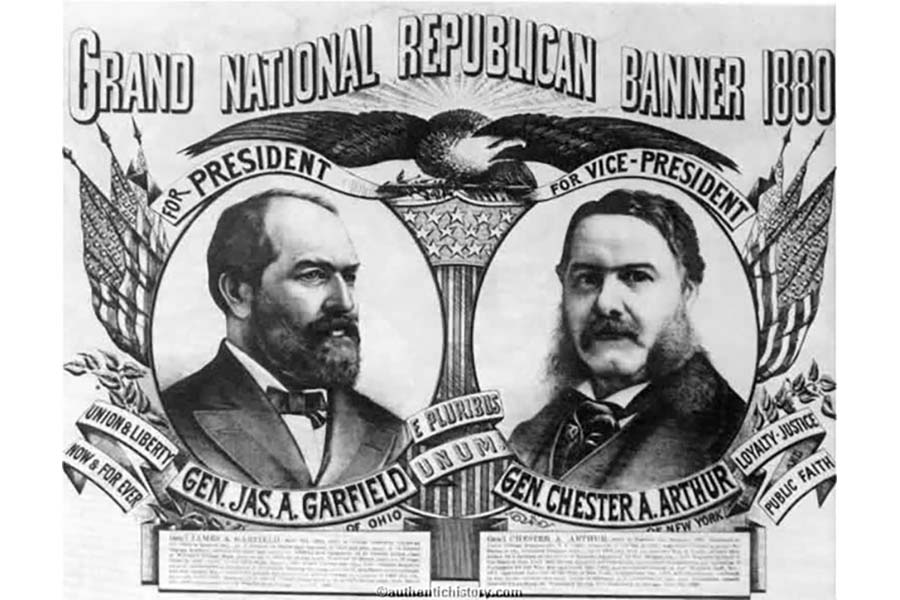
Before 1883, federal employment in the U.S. was largely based on the spoils system, and there was significant corruption. The scandals during Ulysses S. Grant’s presidency (1869-1877) led to the formation in 1877 of the Civil Service Reform League. Six years later, the Pendleton Civil Service Reform Act became law. It established competitive exams for federal positions and prohibited requiring political contributions from employees.
Subsequent legislation further professionalized the U.S. civil service, standardizing job classifications and salaries and providing safeguards against arbitrary dismissal. The 1939 Hatch Act banned classified employees from all electoral political activity, further ensuring nonpartisanship in governmental functions.
During Donald Trump’s first term as president, he experienced considerable resistance to some of his schemes by subordinates. Most publicized was his failure to get the Justice Department to commit illegal acts to help him remain in office following the 2020 election. Characteristic of his behavior, his repeated complaint that President Joe Biden “weaponized” the Justice Department is exactly what he tried to do and is now hellbent on doing. Matt Gaetz, his first choice for attorney general, would have been just the person for that job.
Presidents have the authority to appoint the top leaders of federal agencies, and it isn’t surprising that they appoint persons with whom they think they can work well. President John F. Kennedy appointed his brother Robert as his attorney general. But in that case, and in most cases, cabinet-level appointees and their immediate subordinates have been reasonably qualified for their jobs. Rarely has incompetence been the ground on which senators refused to confirm an appointment.
It’s become obvious, however, that the only qualifications Trump values are personal loyalty and pliability to his wishes. Most of his announced choices have some experience relevant to their jobs, but certainly not RFK Jr., his choice for secretary of Health and Human Services, and Linda McMahon, tapped for secretary of Education. The second Trump presidency is more likely to resemble the operation of a mob family than a presidential administration. Further, his preference for those who will serve him rather than the public is likely to extend beyond the appointments he is legally authorized to make. There is sure to be an attack on the civil service itself.
In October 2020, Trump signed Executive Order 13957 creating a new “Schedule F” classification that would have stripped civil service protections from many federal employees in policymaking positions. President Biden revoked the order upon taking office. But on his campaign website Trump vowed, “I will immediately reissue my 2020 executive order restoring the president’s authority to remove rogue bureaucrats. And I will wield that power very aggressively.”
We don’t know whether a Republican-controlled Congress will pass legislation to allow Trump to return the federal government to its status before 1883. If it does, the widest impact of his presidency will be a deterioration of day-to-day competence. Even if Congress doesn’t go along, we’re still going to experience a second and intensified period of disorder in governmental operations. All charismatic leadership is prone to instability, and this charismatic leader is himself increasingly unstable.
Herbert Rothschild’s columns appear Fridays. Opinions expressed in them represent the author’s views. Email Rothschild at herbertrothschild6839@gmail.com.