Trying to see both those on death row and their victims as real people
“In most of our discussions about these issues we talk about abstractions.”
— Howard Zehr, “Doing Life”
By Herbert Rothschild
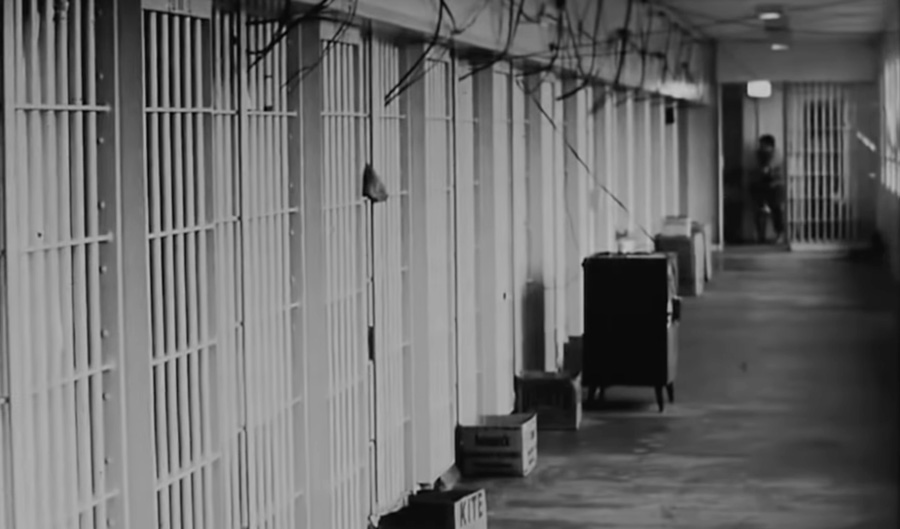
In 1972, when I was president of the American Civil Liberties Union (ACLU) of Louisiana, I had the idea of shooting a video on death row at Louisiana State Prison in Angola. We had been trying to abolish the death penalty without success, and I thought that such a video might be a helpful tool. I received permission from the warden, who opposed the death penalty. A college classmate was teaching English and film at my former high school in New Orleans, and I enlisted him. I wrote the script, and a high school classmate with a better voice than I read it.
The 16-minute film isn’t professional quality, but it conveys a reality hidden from most of us. Two years ago I posted it on YouTube. As I explain there, because the 1973 Georgia v. Furman Supreme Court decision emptied death rows, we never used it. But states found a way to satisfy the court requirements, so death rows filled again in the 1980s. The video is thus relevant. To date it’s been viewed more than 67,000 times, and hundreds of comments and comments on comments have been posted.
I urge you to sample the comments. Some criticize the system for its inequity (“those without the capital gets the punishment”) and convicting the innocent. Others prize retribution (“There victims dont get the pity … they just were tortured and butchered”). But almost all the opinions deal in abstractions and reflect the assurance that accompanies abstraction.
In 1996, Howard Zehr and Barb Toews published “Doing Life.” It’s a compendium of photographic portraits and interviews with men and women serving sentences of life without parole in Pennsylvania. Zehr wrote in the preface, “Issues of crime and justice are near the top of America’s agenda today. … Unfortunately, though, in most of our discussions about these issues we talk about abstractions; we tend to use stereotypes and symbols. Offenders are faceless enemies who embody our worst fears. Victims — if we think about them at all — become planks in our campaigns, pawns in the judicial and political processes. We tend not to see victims or offenders as real people.”
I know about “Doing Life” and its sequel, “Still Doing Life: 22 Lifers 25 Years Later,” because in 1981 one of the men featured in both books, Ricardo Mercado, murdered the brother of one of my friends, Richard Lehnert. In the first book Mercado recounts witnessing a murder in the prison: “A couple of months ago a guy was stabbed in the corridor, in the jugular vein. I have a homicide conviction, but I’ve never seen that. I guess it shows that people commit some acts in a blind rage, and we don’t know what we’ve done. Standing at the window and watching him get it in the neck and spinning around with blood gushing out until he fell on the floor — I will never forget that look. It made me realize what it was that I did.” In the later book Mercado said, “If I would have known what I now know when I was 18, I would never have done what I did — destroyed too many lives.”
Pennsylvania offers only one way for lifers to gain release: a pardon. A Board of Pardons considers their cases. This year the board had to decide whether to hear Mercado’s petition for pardon, and the state’s Office of Victim Advocate asked my friend to submit a letter to the board. I wish I could share with you his entire letter, but it’s too long. In the following excerpts I attempt to convey its tenor.
Richard wrote that he tried to find out how Mercado had spent the years in prison since being sent there, but confidentiality rules stymied him. All he knows is what he’s read in the two books. “What Mercado and the other lifers interviewed in those books have to say is impressive and moving and extremely thought-provoking. With a few exceptions, my responses to it all have ranged from the suspicious and cynical … to the sympathetic: here are people who have been in prison for decades, sometimes (like Mercado) for their entire adult lives, and who have worked very hard to learn as much as possible from the horrendous situations they have placed themselves in.”
He ponders the risk of releasing a person who committed murder. “Releasing such a person requires a leap of faith and trust that I might be willing to make, but I certainly can’t speak for anyone else’s willingness to make that leap, let alone be responsible for or the victim of any influence I might have in making it more possible for someone who murdered once to murder again.” He knows people can turn their lives around, but because he doesn’t know Mercado, he can’t be sure that’s true in his case.
“I have long considered traveling to Pennsylvania to meet with Mercado. I don’t think I have anything to say to him, and I wouldn’t be doing it for myself. I would be doing it for him: to give him an opportunity to ask for my forgiveness for his having killed my brother. I think it is the only thing of real value that I have to offer him. … But I have not yet met with Mercado. I consider it often, but for whatever reason, I do not yet feel ready. I realize that I may never feel ready, or that when I do, Mercado may be an old man, or dead himself. That is the moral weight I bear, the moral risk I run. But it is something I ask myself every day. So I end as I began: Do I think that Richard Mercado should or should not be granted clemency for the murder of my brother 41 years ago? I don’t know.”
The Board of Pardons decided not to hear Mercado’s petition. I hope my friend’s letter prompted its members to reach their decision with the self-examination and humility such occasions require of us all.
Herbert Rothschild is an unpaid Ashland.news board member. Opinions expressed in columns represent the author’s views and may or may not reflect those of Ashland.news. Email Rothschild at herbertrothschild6839@gmail.com.