What would he have made of the assertion that disease and death don’t exist?
By Herbert Rothschild
Not long before Deborah and I moved here from Houston in 2009, we went to a large social gathering. At the door a woman greeted us, and when she heard my name, she said that when she was growing up in New Orleans, her pediatrician was named Herbert Rothschild. I told her he was my father. Then she said, “He saved my life.” I told her I was glad to hear it but that it didn’t surprise me. With some frequency people would say Dr. Rothschild saved their lives or those of their children.
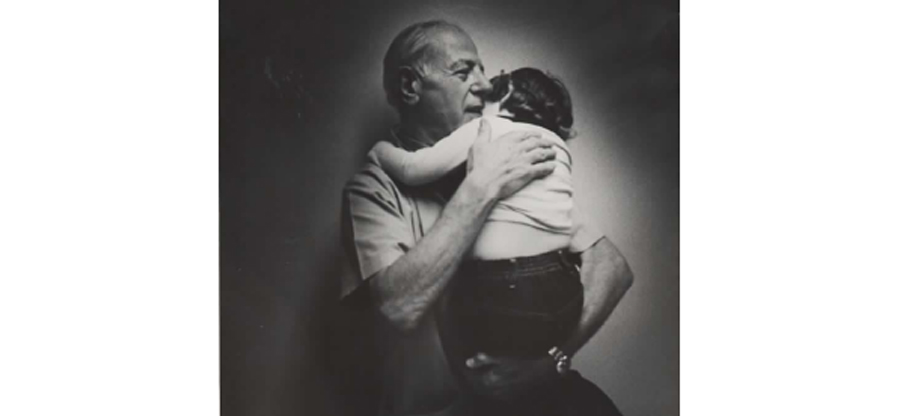
My father was a legend. That’s what a man who taught in a pediatrics department in some midwestern university called him when, by chance, I struck up a conversation with him on a flight to Medford a few years ago. In addition to building the largest pediatric practice in Louisiana, Dad had been prominent in the American Academy of Pediatrics and served for years as president of its Louisiana chapter. Using the political leverage of that position, he was largely responsible for instituting child protective services in the state.
It wasn’t just the approach of Father’s Day that prompted me to think about Dad and share with you this affectionate appreciation. I got to thinking about him in conjunction with an Inner Peace column by Jim Hatton that Ashland.news published on June 1. I wondered what Dad would have made of such assertions in the column as, “Sin (error), disease and death … do not exist,” only the experience of them is real.
People dedicated to the life of the mind are inclined to take seriously the beliefs others express. It’s often best to resist this inclination. Most people don’t really want to examine their beliefs, especially in a social setting. There’s also a general sense that we’re all entitled to our beliefs, no matter how odd they appear to others, and thus it’s rude to question them. Nonetheless, the beliefs we hold have consequences for others as well as ourselves.
So, partly to honor my father and partly to address matters important to my own faith and practice, in this instance I’m going to press Mr. Hatton’s published belief regarding what he deemed the non-existent “dark” dimensions of our lives, including sin, disease and death and, by implication, the suffering they cause. I would, of course, welcome his response.
Mr. Hatton makes a crucial distinction between the existence of the dark dimensions — which he denies — and the experience of them, which he says are real. “This is not to say that the experience of darkness, disease, malady, lack, despair or loneliness is not real. These experiences are very real, but their existence is not founded in Source or Source-ordained. However, when you and I resist a ‘negative’ experience and try to change it or make it go away by affirming that the experience is not real, there is no healing. That use of affirmations while focusing on the problem actually gives more power to the experience itself.”
I’m puzzled by being told that we should deny the reality of disease but affirm our experience of it. I’m especially puzzled by the warning that if we try to make disease go away by saying the experience isn’t real, then we give the experience more power, because, later, Mr. Hatton writes, “The power of flu or the power of cancer is only as powerful as we perceive it to be.” So what am I to do? Affirm it, ignore it or just say to myself that it’s no big deal? Doubtless, I misunderstand.
All that, however, is less troubling to me than the assertion that it’s humans who, because we are insufficiently enlightened, experience disease and other allegedly non-existent manifestations of the dark. I conjure a scenario in which a mother brings to Dad’s office a 2-year-old girl afflicted with meningitis. While some cases of meningitis improve without treatment, others can cause death and require immediate treatment. Now, what will Dad do? Will he tell the girl that meningitis doesn’t exist although her experience of it is real, that she created it consciously or unconsciously, that “darkness itself is a no-thing and disappears when the light shines”? Will he tell the mother that she has aggravated the problem because, when she heard the word “meningitis,” it evoked in her “a feeling of seriousness, a life-or-death situation, and therefore carrie(d) with it a negative judgment,” thus giving power to the disease? Such thoughts wouldn’t enter Dad’s mind. He’d ascertain what medical treatment that child needs, provide it and save another life.
I would distinguish certain dark things that humans introduce into life, such as cruelty and greed, from disease, natural disasters and death. In the case of the former, I would agree that these dark things have no existence save what we impart to them, and thus they must be addressed by moral and spiritual modalities, although the people suffering from their consequences often will require physical care and compassion, not instruction. And because this distinction strikes me as so obvious, I have to wonder why Mr. Hatton regards all the negativities as the same.
The only answer I come up with is that, since our physical existence inevitably entails want, disease and death, he doesn’t believe that matter is real. Some members of my mother’s family were Christian Scientists. They had much the same take on disease as Mr. Hatton does because Mary Baker Eddy held that matter is an illusion. Philosophically, that position may be tenable — many people in many times and cultures have held it. In practice, though, I’d argue that the belief is impossible to adhere to consistently. More importantly, it’s an obstacle to effective mitigation of the immense amount of suffering in this world.
I can give no allegiance to any belief system purporting to make sense of our lives that doesn’t honestly address the suffering of children. Dad didn’t try to make sense of their suffering. He just knew he had to alleviate it.
Herbert Rothschild is an unpaid Ashland.news board member. Opinions expressed in columns represent the author’s views and may or may not reflect those of Ashland.news. Email Rothschild at herbertrothschild6839@gmail.com.