State agency in charge of food benefit payments still currently assessing any potential changes
By Shaanth Nanguneri, Investigate West
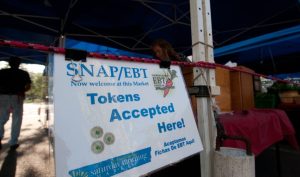
Oregon will see rising rates of hunger and costly administrative backlogs due to the recently passed GOP megabill that cuts federal food aid to states, according to Oregon leaders and advocates aiming to blunt the fallout of what one Oregon Congresswoman called the “single largest rollback of food aid in American history.”
The GOP tax and spending bill, which Trump signed into law on July 4, slashes over $186 billion in spending over the next decade on the Supplemental Nutritional Assistance Program, or SNAP. The federal SNAP program helps more than 700,000 Oregonians afford groceries, according to the U.S. Department of Agriculture, and it has been around as a permanent program since the mid-1960s when then-President Lyndon Johnson signed it into law as part of his declared “war on poverty.”
Gov. Tina Kotek on Thursday slammed the Republican bill as a tax giveaway to the richest Americans, directing state agencies to assess any policy changes necessary to ameliorate the loss of federal support for aid to low-income Oregonians. The state Department of Human Services, which helps administer the SNAP program in Oregon, estimates that the reduction in SNAP funding from the federal government will cost the agency an additional $425 million per year.
“The federal budget shifts unsustainable costs to the state and will take food off the table of Oregonians,” department spokesman Jake Sunderland said in an emailed statement. “These cuts directly undermine the health and stability of our communities.”
The bill also ends the Nutrition Education and Obesity Prevention Grant Program, more commonly known as SNAP-Ed, that funds nutrition and public health education programs run by state agencies and partner organizations for SNAP recipients. More than 95 Oregon State University extension staff who work with the state on nutrition education initiates funded by the program could be laid off, according to the Portland-based Partners for a Hunger-Free Oregon
The White House argues that the bill protects SNAP by combating alleged fraud and encouraging “able bodied adults” to work and earn more income, saving the program for what it says are “the truly needy.” The Republican legislation makes more than half a dozen changes to major benefits in the existing SNAP programs based on factors like immigration and work status.
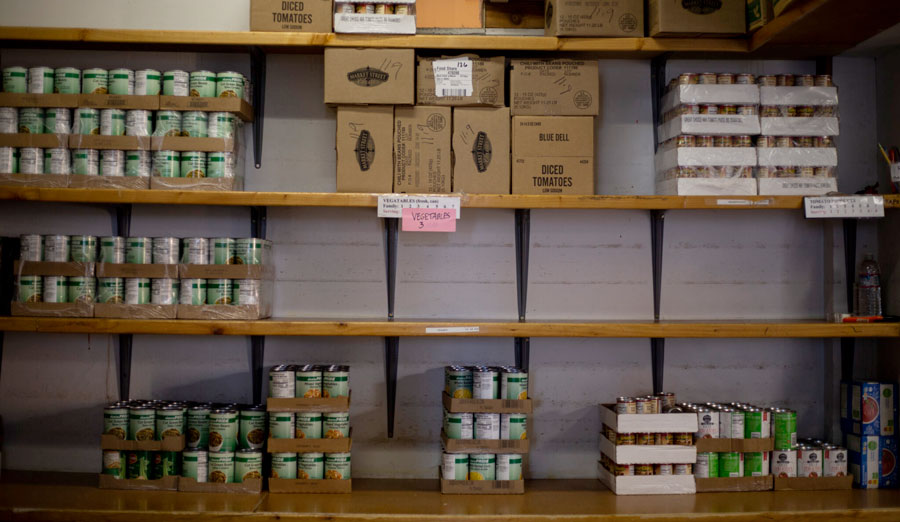
“We know that SNAP benefits typically last an average family less than about three weeks out of the month. That’s why we see people who need both SNAP and our food pantries,” said Matt Newell-Ching, a lobbyist and policy manager for the Oregon Food Bank. “This is going to be a real challenge for our network to absorb.”
Specific cuts and provisions
Work requirements
The Republican megabill imposes new work requirements for SNAP beneficiaries, mandating eligible adults prove at least 80 hours of work, job training, education or volunteering each month to get food assistance.
Republicans also changed the criteria for determining how much money families get under what’s called the Thrifty Food Plan, which estimates the cost of groceries needed to provide a healthy, budget-friendly diet for families depending on size. The Department of Human Services estimates the changes to that cost estimate and funding formula could cut more than 20% of funding to recipients, leading to an average loss of about $160 per month in SNAP benefits for a family of three.
Over-payment penalties
Perhaps the largest share of federal SNAP costs that the Republican bill passes to states are the costs of administering the program. By 2027, the federal government will require states to take on 75% of the administrative costs of distributing SNAP benefits, a 25% increase from the 50% of administrative costs states currently shoulder.
And beginning in 2028, Oregon must pay a larger share of program costs that are exceeded due to over payment.
The state’s 2024 “error rate” of more than 14% for SNAP payments ranked 8th highest in the nation, according to federal data, which puts the state above a target 6% error rate for receiving full federal coverage for beneficiaries under the GOP bill. Advocates told the Capital Chronicle they plan to work to bring the error rate down in the next few years. A carve-out in the bill negotiated by U.S. Senator Lisa Murkowski, an Alaska Republican, that’s meant to give Alaska more time to bring down its high error rate will also benefit Oregon, which could have until 2029 to meet the target 6% error rate.
Home energy assistance
A provision of the Republican bill that goes into effect immediately will make it harder for Oregon families in need to get financial support for their utility bills through SNAP and the Low Income Home Energy Assistance Program, said Alex Aghdaei, SNAP policy analyst and outreach coordinator at Partners for a Hunger-Free Oregon.
Trump in his first term tried to make it harder for SNAP beneficiaries to receive the payments — meant to help low-income Americans pay for rising electricity, gas, water, sewage, phone, internet and trash bills — but failed to do so before former President Joe Biden was elected.
The Republican bill ends auto-enrollment in the energy assistance program for SNAP beneficiaries, and requires eligible individuals and households to apply for the program separately. The utility assistance no longer helps cover internet costs under the Republican bill.
Cuts light a fire under lawmakers
Emergent in the conversation around federal cuts has been a looming reality for state lawmakers: some of the cuts to SNAP will disproportionately harm communities that lawmakers tried unsuccessfully to support with legislation in the most recent session.
For instance, the Legislature considered but failed to pass House Bill 3435, mandating school districts across the state provide free breakfast and lunch for students. And another bill, Senate Bill 611, would have extended food stamp benefits to children under age 6 regardless of immigration status.
Though individuals without protected legal status have never been allowed SNAP, the Republican megabill removed SNAP eligibility for Oregonians with lawful immigration statuses like asylum seekers and permanent refugees, departing from a federal policy enacted almost 30 years ago. That change in eligibility could take away SNAP benefits from 2,900 immigrants in Oregon, according to the Oregon Food Bank.
One of the authors of SB 611, Sen. Wlnsvey Campos, D-Aloha, told the Capital Chronicle that state lawmakers “will do everything we can to mitigate the impact” of the food benefit cuts to immigrants and all Oregonians.
“Unfortunately, SB 611 didn’t pass,” she wrote in an emailed statement. “While its mission resonated with many of my colleagues, the state was facing an uncertain fiscal environment, in large part due to looming federal decisions. Now those decisions have come into focus, and they are deeply alarming.”
Another sponsor, State Rep. Ricki Ruiz, D-Gresham, said he is “continuing to work with community leaders and advocates to bring this conversation back to the table — both here in Oregon and at the federal level.”
“No one should be forced to choose between feeding their children and following the rules of a system that often sees them as invisible,” he wrote in an emailed statement. “Now, with the proposed federal cuts to SNAP and other supports, the stakes feel even higher.”
This story was originally published by InvestigateWest, a nonprofit newsroom dedicated to change-making investigative journalism. Sign up for their Watchdog Weekly newsletter to receive stories like this one in your inbox. This story previously appeared in the Oregon Capital Chronicle.