State Joint Committee on Transportation takes a state-wide transportation tour to gather information to guide 2025 funding package
By Emma Coke, Ashland.news
The Oregon State Legislature’s Joint Committee on Transportation stopped in Medford on Thursday to see and hear first-hand the needs of Jackson County as part of their 12-stop tour that will guide the 2025 transportation package.
The event, based out of Jackson County Expo Center, included a six-stop bus tour hosted by the Rogue Valley Transit District and an opportunity to hear from local stakeholders about their transportation concerns and funding needs. Much of the focus was on a need for increased funding for routine road maintenance and public transportation, and safety improvements.
The tour comes at a critical time. The Oregon Department of Transportation (ODOT) faces a shortfall of $345 million, possibly leading to job cuts, slower incident or inclement weather response times and fewer resources available for routine maintenance.
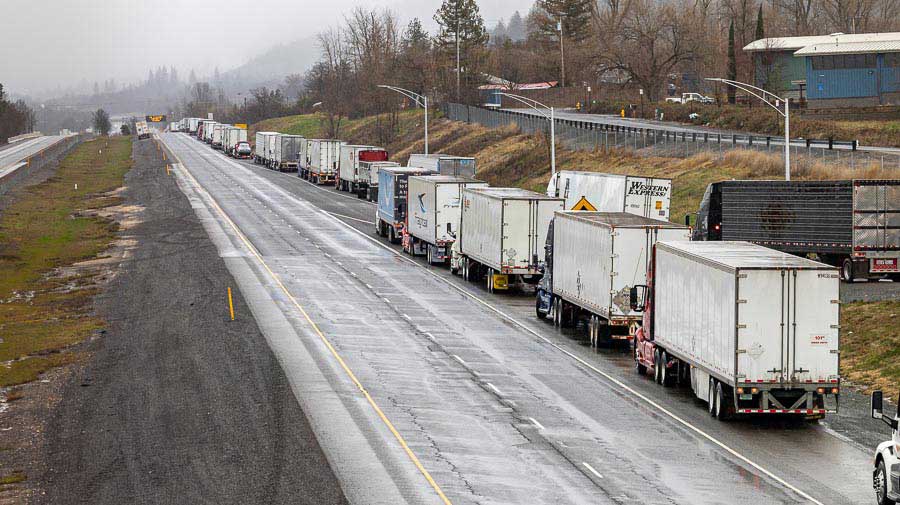
Before the bus tour, ODOT District Manager Jeremiah Griffin shared a presentation about the need for increased funding for Siskiyou Pass winter maintenance.
According to Griffin, Ashland’s three pusher trucks (for pushing semis when they get stuck in snowy weather) are getting outdated and take a 35-member crew to operate.
“There’s no staff to put in the trucks … all of that is associated with delay of stopping traffic,” Griffin said.
Each season they push an average of 2,500 trucks. A four-hour delay could cost around $1 million.
After the presentation, the crowd of around 30, a mixture of the committee and representatives from ODOT, Rogue Valley Transit District and Jackson County, boarded the bus. The bus tour went through Medford, Phoenix, Central Point and Talent and lasted just over an hour-and-a-half. Attendees got to hear about issues such as RVTD staff shortages and road maintenance needs.
According to RVTD General Manager Julie Brown, they’re facing a staff shortage, but they are in the process of hiring more drivers.
“We are so short on drivers right now that yesterday I had my maintenance manager driving,” Brown said.
In ODOT’s Region 3, which includes Ashland, many of the roads and highways are in poor or very poor condition due to funding challenges, according to ODOT. Routine maintenance is getting hard to maintain, and with the very cold winters and very hot summers, the roads take a beating.
“That rating really hurts us,” Griffin said. “We don’t like being rated as one of the lowest areas in the state. We take it really seriously. Our crews work to keep up with it but we’re really struggling with that.”
“This is our community,” Griffin added. “This is our home. Our kids and our parents drive these roads.”
With funding issues, Griffin also said they won’t be able to de-ice roads in Central Point, Grants Pass, Ashland or Medford going forward.
Back at the Expo Center, around 30 stakeholders from around the community gathered to share their unique transportation needs for the legislators to think about when creating next year’s package.
Lorrie Kaplan, from the Ashland Climate Collaborative; Linda Adams, Transportation Advisory Committee chair; and Chad Woodward, climate and energy analyst, were there representing Ashland’s interests.
For Ashland, interests included more local control of transportation infrastructure maintenance, improved street safety for multi-modal transportation (cars, bikes, pedestrians sharing roads) and stable funding for electric vehicle incentives.
“We need to separate these modes of transportation,” Kaplan said. “A lot of people that could possibly get out of their single-occupancy vehicle would do so if they felt safe.”
Brown, who besides being the RVTD general manager is also the chair of the Oregon Transportation Commission, which oversees the work of ODOT, said she was concerned about budget cuts to ODOT.
“We’re in a bad situation,” Brown said. “We just recently had to make decisions on our budget that we turned in to the governor, looking at over 1,000 positions that we will have to cut if we don’t get a transportation package across the finish line.”
After hearing from the stakeholders, state representative for southern Jackson County Pam Marsh noted three things she heard.
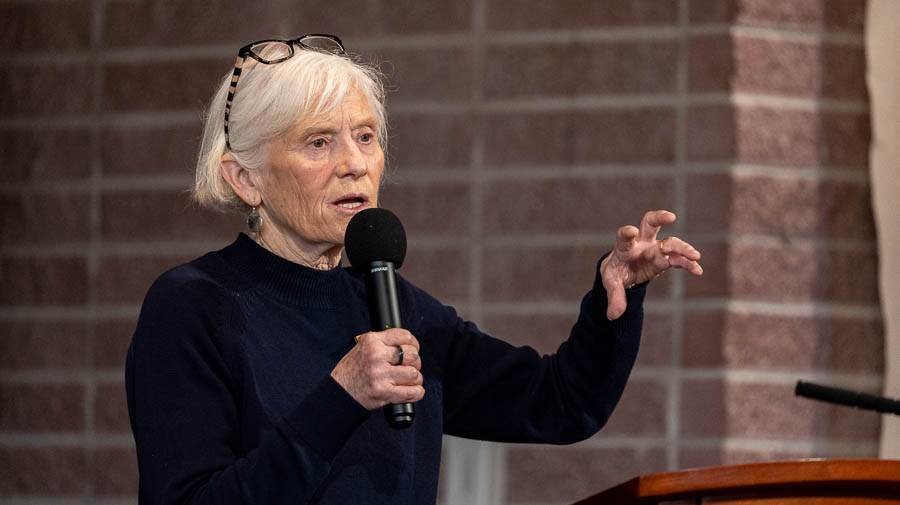
Marsh said she felt there was a strong sense from the stakeholders to do their part in paying for the road maintenance, with flexibility and collaboration between sectors to increase road capacity.
“It’s not about competition,” Marsh said, “it’s about building a system that works for everyone.”
She thought it was a good reflection of the varying interests across the community.
“A lot of the underlying themes were the same,” Marsh said, “which is, we need to come up with money … and we need to have money that’s as flexible as possible.”
Marsh said the tour is a harbinger of significant discussions for the 2025 transportation package.
“That is going to affect everybody who uses roads in one way or another,” Marsh said.
Email Ashland.news reporter intern Emma Coke at emmasuecoke@gmail.com.
Lorrie Kaplan is an Ashland.news board member.
Aug. 12: Added more information about Julie Brown’s role, and that, when speaking about concern regarding budget cuts, she was referring to ODOT, not RVTD.