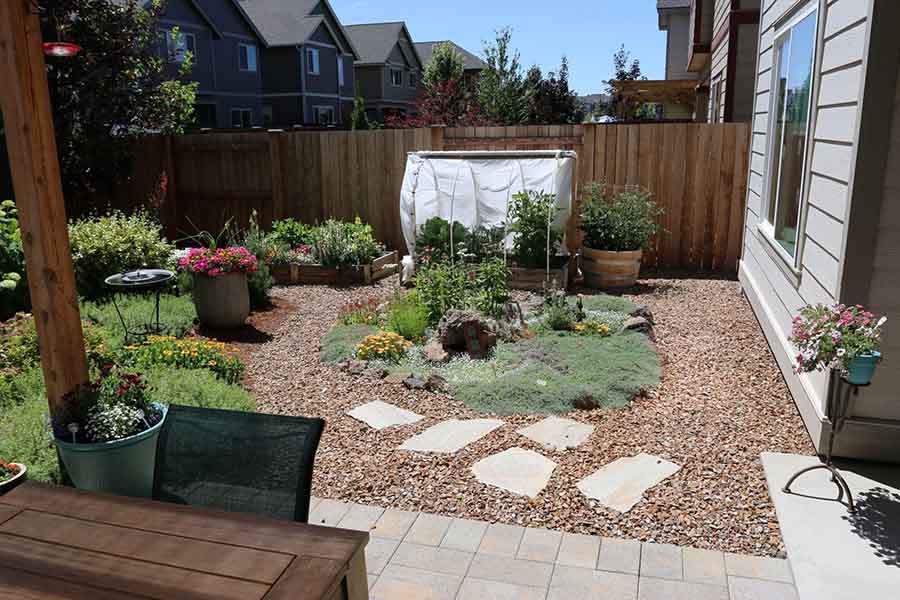
Expert advice on ‘defensible space’ and plant management
By Sydney Seymour, Ashland.news
The “leading cause of conflagration within our urban environment” is wind-blown embers cast onto properties that often start spot fires, says Brian Hendrix, Ashland Fire & Rescue’s Fire Adapted Communities coordinator. Five years ago, the devastating 2020 Almeda Fire was driven by winds up to 40 mph, the city of Ashland reported.
To ensure embers don’t find a flammable landing spot on your home, business or landscape, Hendrix said it’s critical to create “defensible space” — a buffer between a property and the grass, trees, shrubs and surrounding wildland.
Along with home hardening through use of fire-resistant building material and design, creating a buffer helps form a firewise property that reduces risks of wildfire disaster. The most important thing to do to protect your home from fire is to keep anything combustible 5 feet away from the house or deck, said city wildfire risk assessment volunteer Charisse Sydoriak.
Defensible space isn’t replacing “English gardens with bare earth,” but strategically landscaping, Sydoriak said.
‘The right plants in the right places’
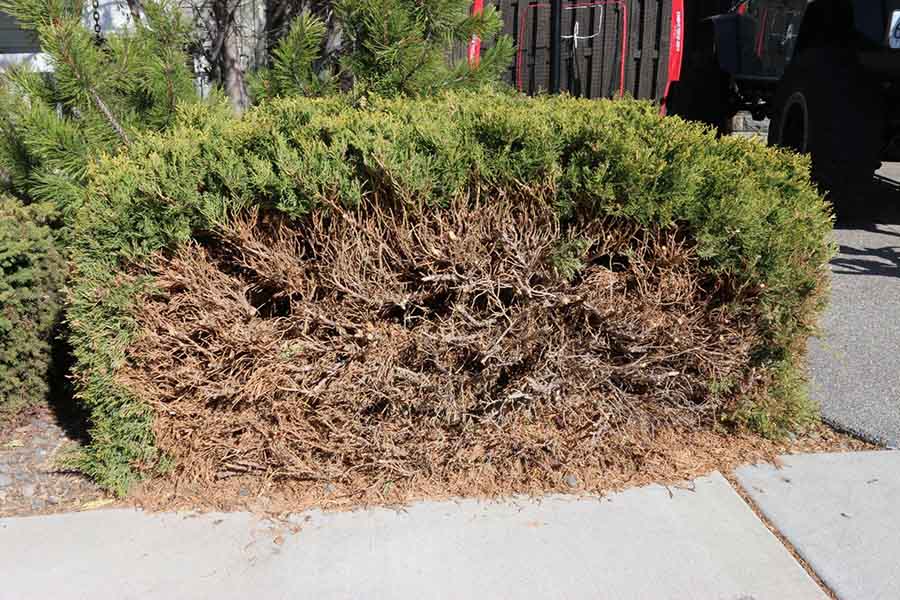
“Having the right plants in the right places really does affect whether or not a house ignites,” Hendrix said. Certain plants like ornamental grasses, invasive plants and large evergreens can more easily ignite and spread fire due to their natural oils and dry foliage.
In October 2018, Ashland adopted a Wildfire Safety Ordinance that restricts any new plantings of a list of flammable species within 30 feet of structures and says homeowners must remove any new restricted seedlings and plants, as well as trim weeds and grass throughout the fire season to avoid fines of up to $500 per day.
However, Ashland’s current plant regulations fall short, said Sydoriak, who has 35 years of experience as a federal lands fire and natural resources manager.
She explained that the guidelines were based on and adhere to new construction. Most of Ashland, however, is older construction and landscapes that have been “grandfathered in.”
Dig deeper
Visit Ashland’s wildfire resources and partnership with Fire Adapted Communities, a network of communities managing wildfire risk through strategic, firewise practices.
View Ashland’s prohibited flammable plant list and basic spacing guidelines. For best practices on firewise landscaping, click here and here. Learn more about home ignition zones here. Request a property risk assessment through the Ashland Wildfire Risk Assessment Program. Report prohibited flammable plants to Ashland Weed Abatement at 541-552-2246.
Sydoriak said Ashland’s Community Wildfire Protection Plan, adopted this year, calls for editing landscaping best practices to account for older, pre-existing construction and planting, including reinforcing the prohibited flammable plant list.
Hendrix said the current plants on the list will remain, but updates will include adding new prohibited species and removing exemptions for some plants previously allowed within 30 feet of structures.
Creating a firewise landscape
With a growing list of prohibited plants, it’s important to turn to firewise plants that produce fewer embers and don’t intensify fires. These plants have open branching patterns, wide and flat leaves, little dead material and waterlike or minimal sap. Options include deciduous shrubs, trees, annuals, bulbs and cool-season grasses, if well-maintained.
Without standardized tests for plant flammability, Sydoriak said, opinions on “fire-safe” plants vary across the U.S. To help property owners make informed decisions, she pointed to the “Bible for the Pacific Northwest on what you should plant,” in which Oregon State University accounts for plant spacing, plant maintenance and slopes.
These factors are “even more important than the selection of plants,” Sydoriak said. If property owners understood all of those factors, she continued, “we could greatly reduce the probability of a wildfire catching homes on fire.”
Plant placement and maintenance
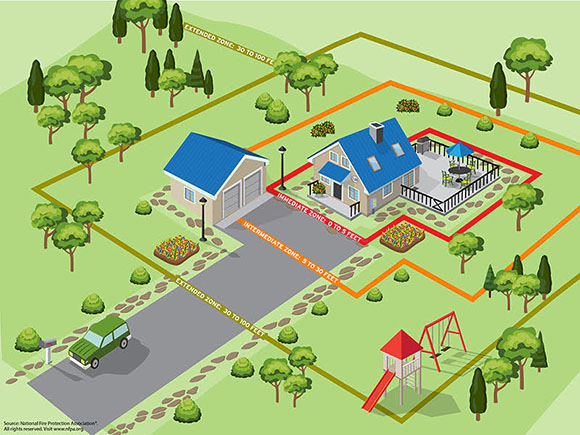
Firewise vegetation, plant maintenance, and proper spacing in the three home ignition zones — a building itself and the surrounding 100 feet (200 feet on steep slopes) — increases the chances for that property to survive a wildfire, the city of Ashland says.
Within the immediate zone, zero to 5 feet around the property, it’s best to have no plants at all, with only rocks, mineral soil, or bare dirt to form defensible space. If insisted, only short and highly firewise plants, like succulents, should be placed.
In the intermediate zone, 5 to 30 feet away, slightly taller firewise plants can be spaced appropriately. The extended zone, 30 to 100 feet out, can feature even taller firewise plants that keep flames smaller and interrupt the fire’s path.
Within 30 feet of the house, trees should be placed at least 18 feet away from one another, 12 feet apart within 60 feet of the house and 6 feet apart within 60 to 100 feet of the house. Shrubs should be spaced twice their height on flat terrain, four times their height on 20% to 40% slopes, and six times on steeper slopes.
Even firewise plants will burn if poorly maintained, Sydoriak said.
“Bigger trees overhanging the roof of the house are constantly shedding material and filling up gutters, making it possible for houses to burn,” she said. “You need to know how to maintain and prune them to keep the house from burning.”
Hendrix advises property owners to “shop around for the right landscaper” who believes in firewise properties. The city offers a service-only list of landscaping companies that have signed on reading Ashland’s city rules and therefore understand what defensible space is, Hendrix said.
Do what you can
For those unable to make improvements to the property they reside in or their surrounding area, Hendrix said to pay extra attention to what you can control, like getting renters’ insurance and/or your evacuation plan.
More tips adapted from Sydoriak, Hendrix, and OSU Extension Service:
- Space plants out with paver rocks and use compostable mulch.
- Avoid planting in rows. Rather, maintain horizontal and vertical spacing between plant clusters.
- Avoid hedges within 10 feet of a house.
- Place plants away from windows.
- Every 6 feet, create a break in vegetation or flammable objects.
- Remove tall grass, shrubs and small trees beneath larger trees to reduce ladder fuels — vegetation that allows fire to spread up into tree canopies.
- Prune trees at least 6 to 10 feet above the ground and shrubs at least three times their height between them and the lowest tree branch.
- Clear gutters and base of buildings of debris and use mesh to keep leaves out.
- Keep plants well watered and tune up your irrigation system before fire season.
- Keep turf grasses mowed to 3 to 4 inches and native grasses to 6 inches or less.
- Remove any dead or dying plant material.
- Remove any flammable privacy screenings like bamboo, and talk with your neighbor about creating a more defensible space together.
Email Ashland.news Snowden intern Sydney Seymour at sydneyseymourr@gmail.com.