Local builder shares insights in wildfire protection ahead of community events hosted by the city and local nonprofits
By Morgan Rothborne, Ashland.news
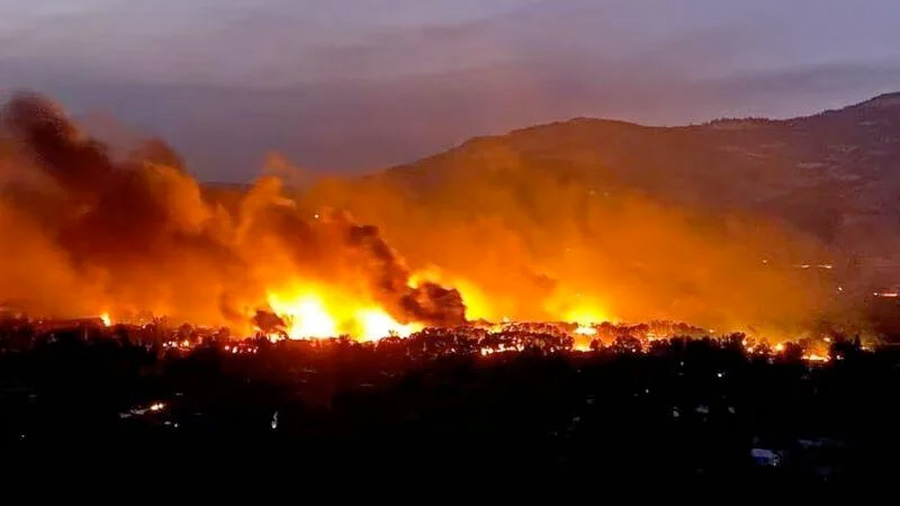
Scott Balcom stayed in the Rapp Road area of Talent through the night of Sept. 8, 2020, in an attempt to defend his home that became a study in how a wildfire eats a city.
“I watched a lot of stuff burn. I got tired of watching stuff burn. … I learned a lot by watching all the homes burn. Even in the remains of my house,” he said.
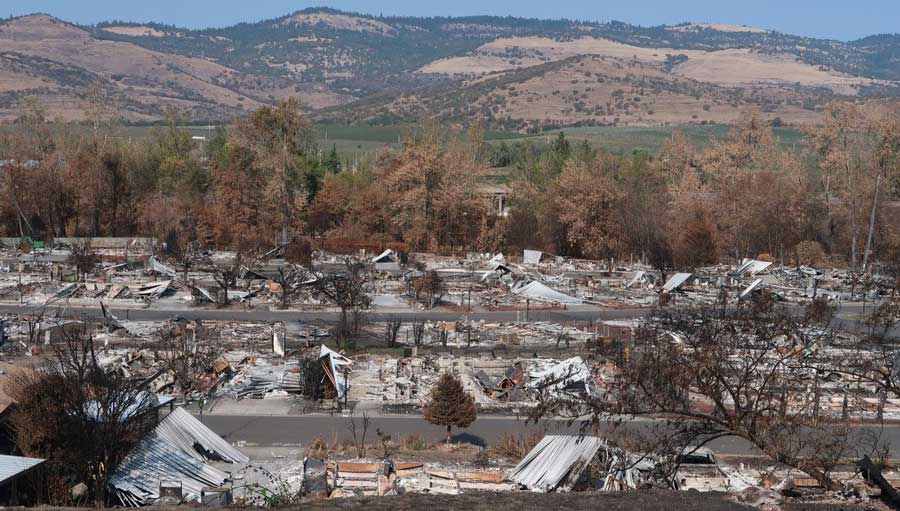
Balcom’s home was one of many in his neighborhood consumed by the Almeda Fire.
When Balcom’s then-fiance called to warn him, he was watching the smoke column in the distance change color and feeling sympathy knowing someone’s home was burning. But the fire was miles away. He only came outside after the power went out and he was forced to open the door to his workshop despite the heavy winds.
He prepared his home just in case, watering the lawn and fence then moving potential fuel such as a shade cloth and wood pile indoors. Within an hour or so, the fire came.
“You couldn’t outrun it,” he said.
Neighbors evacuated and more than one police officer urged Balcom to leave. He spent the night in his truck parked near his home. Through the night he walked to watch the fire eat.
“You know, bark, mulch. I thought it looked nice and it was a good idea until I saw the fire,” he said.
Two little buildings neighboring his house were surrounded by mulch. The fire “came up with the speed of a galloping horse,” across dry weeds and vegetation, then went into the mulch.
The owner came with a shovel and stirred, apparently attempting to put the fire out, Balcom said. The wind fanned the mulch like an enormous charcoal barbecue until the fire came to the buildings and seemed to eat up the paint, race across the roof, chew a hole through and, within 20 minutes, flicker at holes in the ground.
A nearby church made of stone and concrete didn’t burn, but the bark mulch outside smoldered for multiple days, he said.
He noticed the wind seemed to create a vacuum effect in the attics of houses. To prevent moisture building up in the winter, homes are ventilated at the base and near the top, often with an attic space, he said. When sparks and embers become airborne, they seemed to get sucked into the vents and windows, he said.
Before being forced to abandon his home, he heard the windows and trap door in the attic rattling from the vacuum effect of the wind. Throughout the night, he watched the fire jump distances and quickly consume a home once it ate into the roof.
“I never thought my house would burn down. I’m in Talent. I’m not at the edge of a forest,” he said.
His fence burned near where dead vegetation had been at the base of a tree. But because he soaked the fence, the fire didn’t get far. The lawn — also heavily watered — was singed only close to the house except one square where the lawn burned so hot it was sterile for a year, he said. Over that spot he found fibers of what appeared to have been asphalt roofing.
Once the fire reached his own home, a freshly oiled, newly completed wood stoop caught quickly. When the door fell in, the fire entered. The center burned the hottest, here he found no remains of aluminum rock climbing gear and only chain and bits of metal from an aluminum bike. Glass had melted and re-fused together. The woodshop, despite its ample sawdust, seemed to benefit from a concrete rather than a wood floor.
Balcom has spent his life working in construction. He translated what he saw to building back carefully. His new home doesn’t have an attic, but high ceilings for ventilation. Vents under the house are not plastic but carefully constructed metal. Despite years of experience in carpentry, all stoops and steps leading into the house are rock and concrete, he said. The roof is metal.
“There was nothing left of my asphalt roofing except the tiniest bits of mesh fiber” he said of his home after Almeda.
Balcom has heard various theories about what started the fire, but he saw something people have to work together to prevent through caution and care during fire weather.
“What I saw was an unstoppable natural force,” he said.
2025 Better Prepared Wildfire Series
To foster resilience in the face of wildfire, from spring to deep in fire season, Ashland.news will collaborate on a series of events with the city of Ashland, Ashland Climate Collaborative and Ashland Together, as previously published by Ashland.news.
The first event, a wildfire preparedness workshop to include home hardening, defensible space, emergency alerts, evacuation preparedness and practice, is set for 6 to 8 p.m Monday, April 21, at Carpenter Hall, 44 S. Pioneer St.
An open house to give the public the opportunity to participate in the city’s Community Wildfire Protection Plan and have the opportunity to meet members of Ashland Fire & Rescue is set for 2 to 5 p.m. Sunday, May 4 at The Grove, 1195 E Main St. Residents may drop in anytime during those hours.
Have questions about how to improve the wildfire resilience of homes and neighborhoods? Ashland.news will host a virtual workshop from 6 p.m. to 8 p.m. Thursday, May 8 via Zoom. Questions and photos submitted to Ashland.news will be answered with science-based strategies.
Ashland.news will host a “What’s Your Plan?” evacuation event at the Historic Ashland Armory from 6 to 8 p.m. Wednesday, July 16. The interactive event will walk participants through preparation for and evacuation from a wildfire. Attendees will learn about preparing an evacuation bag, routes and practice scenarios to better prepare.
Registration is preferred for all events with the exclusion of the open house. For more information on this series of events and wildfire preparedness within the city, visit the city’s website or the Ashland.news events page.
Email Ashland.news reporter Morgan Rothborne at morganr@ashland.news.