We all need to use water wisely because changing climate and population growth will increase total demand
By Bob Kaplan
I’ve been a water geek since before I went to Paraguay with the Peace Corps as a water and sanitation volunteer at age 21. So it was fun to join Ashland’s ad hoc water advisory committee last year, when city staff and consultants were due to update our Water Management and Conservation Master Plan. I was eager to do a deep dive into all the factors that help us ensure access to sufficient water for the next 20 years and beyond.

Where do we get our water?
We have three sources, and Ashland has a nifty dashboard to track them all year long.
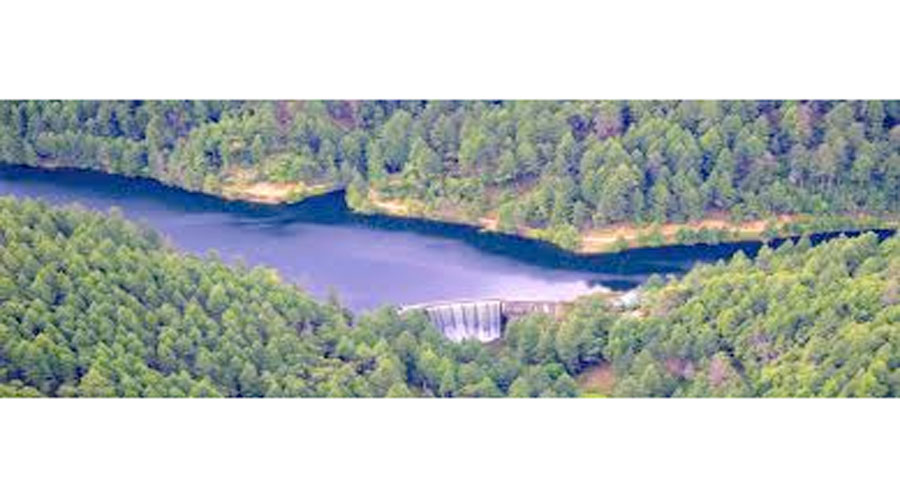
Reeder Reservoir. Our main source is Reeder Reservoir, which collects Ashland Creek flows from above the reservoir and can store up to 280 million gallons. Winter snowpack is a critical determinant of the volume and duration of Ashland Creek flows into Reeder. Our capable water team in the public works department controls the water level so we mostly use Reeder throughout the year. They hold the level at about 60 percent through the winter for flood control and in April/May start filling it to 100 percent to maximize availability during the summer irrigation season.
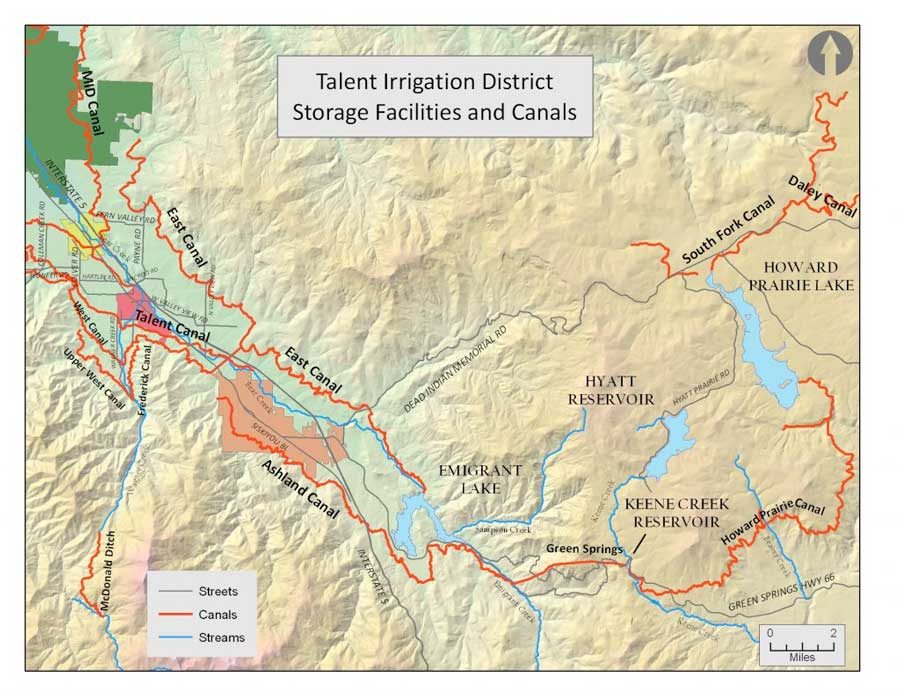
Talent Irrigation District. Our secondary source used to be the TID, a separate system connected to Howard Prairie and Hyatt Lakes. We treated some TID water to add to our potable water supply, but we haven’t done so recently with TID water levels so low. Even so, when untreated TID water is available to folks with a connection for several weeks each summer, it reduces the draw on our potable water system. Although TID reservoirs are filling ahead of last year’s levels, they’re still below their long-term average. (By the way: Nearby Emigrant Lake doesn’t feed Ashland’s ditch spur of the TID; it connects to the TID farther down the valley below Ashland.)
Talent-Ashland-Phoenix Intertie (TAP). Lastly, Ashland has rights to 1,000 acre feet of water stored in Lost Creek Lake (about 326 million gallons). We pay the Medford Water Commission to treat our Lost Creek Lake water, and we pipe it to Ashland through TAP to add to our potable water network. TAP infrastructure can handle about 2 million gallons a day — an important variable for our water team as they manage supply to meet demand.
The state has certified a permit for a bit more than half of our Lost Creek Lake water right. To permit the rest, we need to show the state how much water we have and how much we’ll need over the next 20 years. The Water Management and Conservation Plan is how we do that.
How much water do we need?
Ashland normally uses about a billion gallons of potable water each year, 80 percent of which comes from Reeder Reservoir. From mid-May through October, we use between 3 and 6 million gallons a day, versus about 1.5 to 1.8 million gallons a day during the rest of the year when we’re not watering our gardens.
During the summer, the stream flow into Reeder Reservoir slows to a trickle, and that’s when we need to “turn on” the TAP. If we didn’t, we’d deplete the reservoir in about six weeks! So sometime in July or August we begin to draw some of our water rights from Lost Creek Lake to reduce the strain on Reeder. But since TAP can only handle a maximum of 2.13 million gallons per day (a bit more than a third of our summer needs), the water level in Reeder still drops pretty quickly in August.
The Water Management and Conservation Plan
The purpose of the plan is to balance our water sources and guide water management and conservation policies, programs, practices and financing to ensure long-term water sufficiency in Ashland.
It’s chock full of interesting data and trend analyses. You can read what staff presented to the city council last November here: ashlandoregon.gov/DocumentCenter/View/2028/2023-Water-Management-and-Conservation-Plan-pdf?bidId=.
My main takeaways:
- Our changing climate means hotter and drier summers and less winter snowpack. Outdoor plants will be more stressed in summer. A lighter snowpack means smaller flows into Reeder Reservoir, particularly in August and September, and more need to rely on TAP.
- We’ll have more days in the spring and fall when the temperature climbs above 70 degrees. That translates into extra irrigation days — and a greater draw on Reeder in these shoulder months.
- Conservation is an additional “source.” We’ve reduced our usage from an average of 160 gallons per person per day in 2005 to 139 gallons in 2022, but that’s still high compared to places where water is in short supply. Further reductions are possible, but they’ll be more difficult to achieve, particularly when our non-native plants now call out for more water in spring and fall. The plan reviews progress against benchmarks set in 2014 and defines additional measures going forward, but it doesn’t set a per person or overall conservation target beyond what we’ve already achieved.
- We need to secure our remaining water right from Lost Creek Lake. But this can never be more than our secondary source because it’s less than a third of our total demand and because TAP can only transmit a third of our daily needs in summer.
The bottom line is we all need to use water wisely because the changing climate and population growth will increase our total demand. We can all cut our water use indoors by installing low-flow faucets, showerheads, toilets and washing machines, and we can choose drought-tolerant plants and efficient irrigation to reduce our outdoor use too. Saving water also saves money! Check out these city resources for water saving devices and rebates: ashlandoregon.gov/534/Water-Conservation-Programs.
Email Ashland City Council Bob Kaplan at bob@council.ashland.or.us. Email letters to the editor and viewpoint submissions to news@ashland.news.