There is real harm when racially charged statements are not called out and we are not there for those affected
By Leda Shapiro
I wish to take up the issue of racism in our city. I am proud that several councilors were quick to denounce it with public statements, though many others in social media have expressed opinions that denied the racism and dwelled instead only on the Extended Law Enforcement Area policy.
Before I speak about this incident of racism which I believe to be insidious and not incidental, I want to talk about how it has been wrapped in the package of the ELEA. By making ELEA somehow a higher priority, it allows us to ignore the racism. I believe these to be two issues that are both separate and important. I, like others, have many questions as to the implementation and process of ELEA, and look forward to more debate before finalizing the codes. The discussion of ELEA, the policy and the process, continues, as should the discussion about racism.
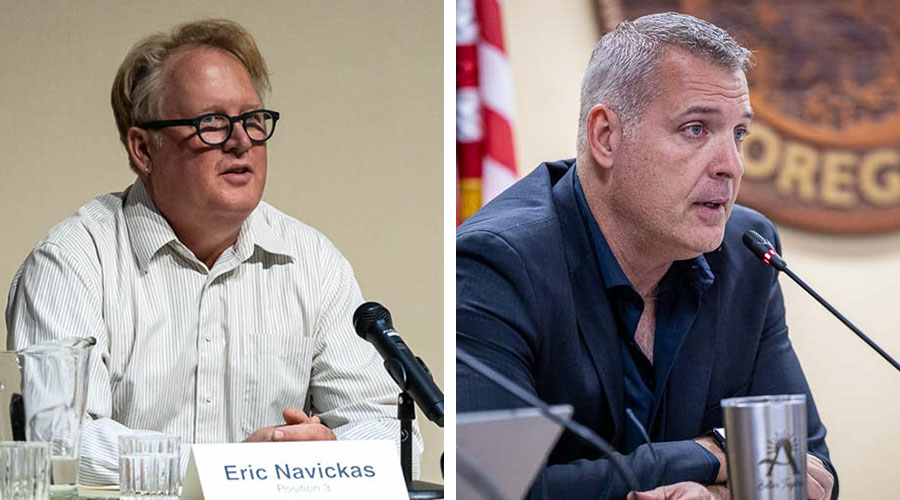
I have been posting about this on social media. Then last Friday, Herbert Rothschild’s column in Ashland.news spoke of the incident (in which Police Chief Tighe O’Meara got in an altercation with Eric Navickas and arrested him after saying that Navickas, in testimony criticizing the ELEA, had made racist comments to the City Council). Rothschild was full of excuses for the racially charged episode — saying that Navickas’ statement to the council was misunderstood and not intentional racism.
But Rothschild went further, claiming some nefarious motive of our Councilor Jeff Dahle. It is this column, with its misperceived view, that has caused me to write this letter.
Rothschild says in the column: “I don’t know Dahle personally. Nevertheless, I assume he’s not obtuse. Thus, the explanation for his so grossly mischaracterizing what Navickas said must lie elsewhere.”
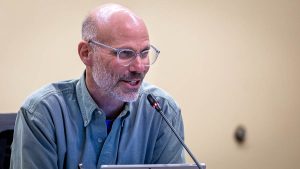
What Dahle and Councilor Dylan Bloom (Bloom called Navickas’ comments “objectively racist and entirely unacceptable in any forum”) both said with their statements calling out Navickas is just what it seems. They did not “mischaracterize” Navickas’ statement. Just the opposite.
Unconscious racism, also known as covert or everyday racism, refers to the understated and often unrecognized ways individuals experience racial prejudice in daily life. This form of racism contrasts with overt racism, which is more explicit and easily identifiable.
No, Navickas did not actually say that all Black people are criminals.
But after a lifetime lived amid racism, of stereotyping Black people in this way, a sentence that puts Black people and criminals in the same sentence does imply that Black people are criminals, whether it is said explicitly or not. After all, we are the product of our culture. And being “woke,” though it has been redefined by some as derogatory, to me, still means waking up to what is behind the unconscious racism, stereotypes and centuries of meaning in our language.
Unconscious racism happens through the insidiousness of our cultural prejudices. That is what is evident in Navickas’ statement. I find the denial of the racist connotations to be not only naïve but deeply complicit, especially in our community, which claims to be progressive.
Personally, I find it disheartening to see so many in our community dismiss the accusation as either a diversion or virtue signaling. There is real harm when such racially charged statements are not called out and we are not there for those affected.
Though I do not always agree with Councilors Bloom and Dahle, I commend them for speaking out, for stating what needs to be said, for recognizing the truth for what it is, even when others choose willful ignorance.
I find it not only naïve, but deeply complicit in allowing systemic racism to persist. In a community that claims to be educated and progressive, it saddens me to see how quickly people dismiss the real harm of such rhetoric and center instead on the comfort of the speaker over the impact on those affected.
Leda Shapiro lives in Ashland.