Ashland should replace some police officers with a team of Community Liaison De-escalation Officers
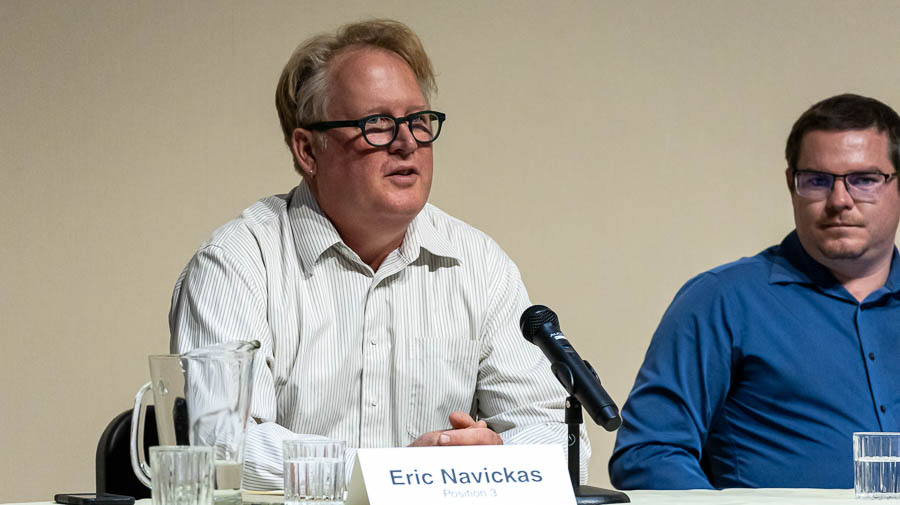
By Eric Navickas
The Ashland Exclusion Zones, which have recently been expanded to include much of the city of Ashland, empower police to remove people through aggressive citation. Under the proposal being promoted by the Ashland police chief, one charge of a misdemeanor can trigger expulsion prior to any trial or conviction. These are policies designed to remove a demographic of people, encourage quick citation, and empower policing that is prone to bias and abuse. The city of Ashland should not be endorsing or enacting these policies of exclusion that are unfortunately being put in place in more and more cities up and down the West Coast.
The implications of these policies toward racial discrimination should not be dismissed lightly. Biased policing, generational poverty, and a breadth of systemic injustices and discrimination have created a mass incarceration system in this country where seven in 10 inmates are people of color. These exclusion policies will also disproportionately impact people of color.
In Ashland, the policy of cordoning off parts of town to remove people is aimed at a class of homeless people suffering from poverty. Citations, criminal charges, jail time, and harassment only serve to make their lives more difficult and do little to solve the underlying problems. Criminal records make barriers to employment and housing more substantial and can lead to lifelong homelessness.
Ashland can do better and find real solutions to the problem of poverty. We need to rethink our policing tactics surrounding the homeless population and step away from these aggressive citations and exclusion policies. The Ashland Police Department has previously employed a community liaison officer whose job was outreach to the homeless population and troubled youth, to direct them toward services, and to provide counseling. This program was very effective.
I believe the city of Ashland would go much further toward addressing conflicts through supplanting five of its current police officers with a team of Community Liaison De-escalation Officers whose task is to interface with the homeless population, to de-escalate situations, to avoid unnecessary citations or arrests, and to work to direct people to services. The skill set of a police officer isn’t effective in addressing the socio-economic realities of homelessness. We need a team trained with a different skill set to address this complex social problem.
One cannot expect all conflicts to disappear or the City of Ashland to solve the broader issues that have left many suffering from homelessness. We can, however, recognize the societal nature of the problem and work toward compassionate responses that respect the rights and dignity of the individuals suffering from this crisis.
Ashland resident Eric Navickas is a former city councilor.