Firefighters have completed training on the engine, provided through a state program, just in time for the new fire season
By Morgan Rothborne, Ashland.news
Just ahead of the beginning of fire season on Sunday, June 1, Ashland Fire & Rescue has completed training with a new engine designed for wildland urban interface and regional support.
The engine was one of many dispersed through the state via the Oregon State Fire Marshal Engine Program, Wildfire Division Chief Chris Chambers said. He estimated the vehicle would have cost around a half a million dollars if it had not been provided through the state program. Ashland will be expected to maintain and staff the engine and to answer calls for mutual aid, Chambers said.
A big off-roader
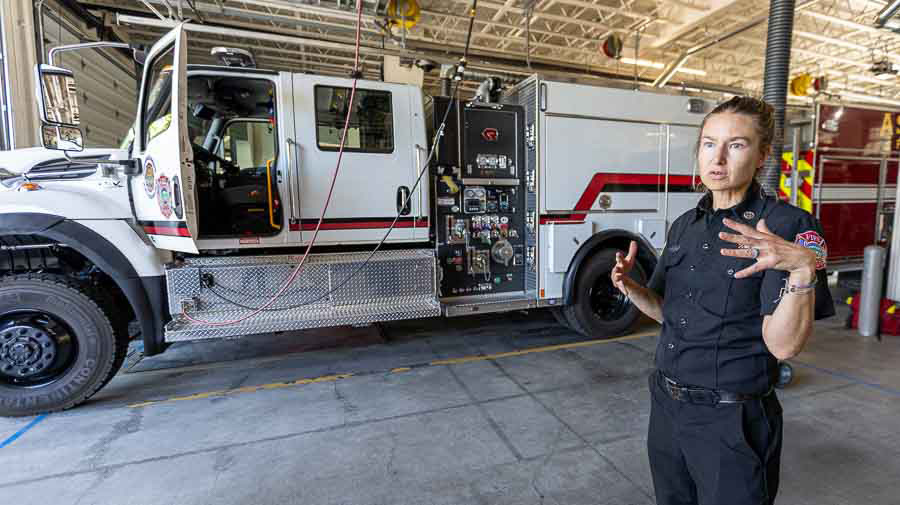
AF&R Captain Ashley Manning stood between the new wildland engine and classic red fire engines. The new engine’s tires rise to hip height for anyone up to about 5 feet 5. The red engines, Type 1’s, are bigger and lower to the ground.
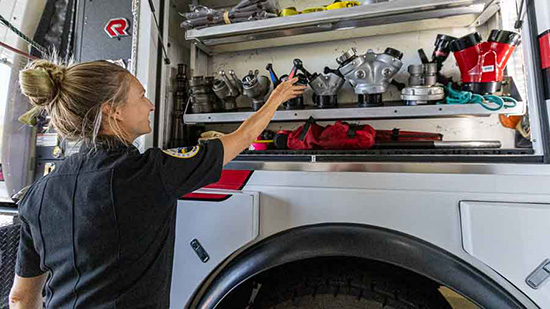
“We call these pavement princesses,” she said of the Type 1 engines.
The new wildland engine can handle terrain from Ashland’s many wildland urban interface areas and its steep rural neighborhoods. House fires or medical calls in winter on a steep slope will be easier to answer with the new engine.
Captain Daniel Caples said a Type 1 also has a larger hose and is better equipped to work with fire hydrants in an urban setting. The wildland engine has a hose more akin to what is used on wildland fires. The engine carries more water and is equipped to work with water trucks.
‘Pump and roll’ capability
“It can also pump and roll,” Chambers said, meaning the engine can be driven and spray water at the same time.
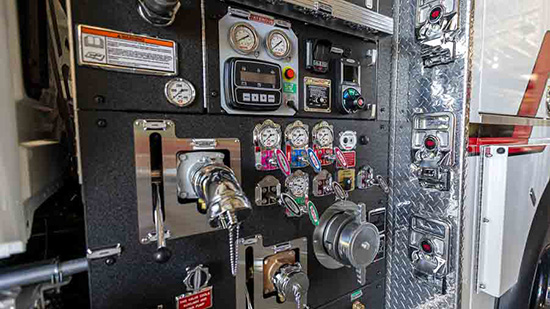
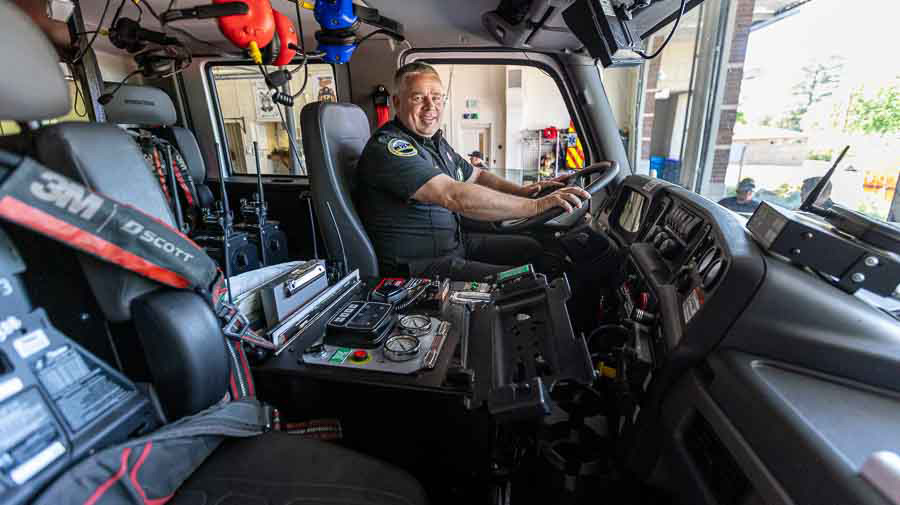
Color-coded levers and what appeared to be buttons on the side held labels such as “water foam” and “deluge.” A suite of lighted buttons and switches was spread between two seats in the front of the cab. Headsets and microphones hung from hooks.
“These are hooked up to our radios and they protect our ears from the sirens,” Jack Borden, firefighter and paramendic, said.
Borden could be heard through the headset, part of an interconnected system of radios firefighters can use to discuss strategy as resources arrive on a scene or to communicate with dispatch.
“All three shifts have now completed training on it and it’s cleared to respond to a wildfire at any point from here on out. Just in time for fire season!” Chambers said.
Email Ashland.news reporter Morgan Rothborne at morganr@ashland.news.