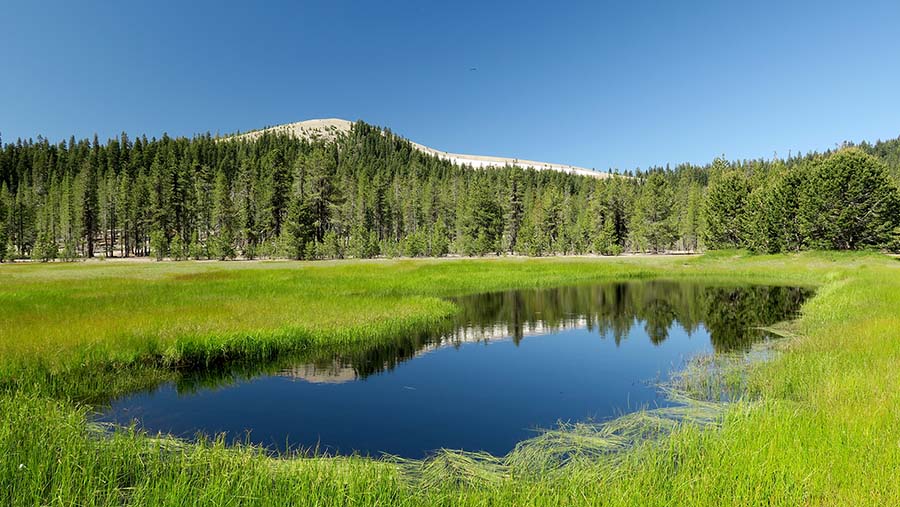
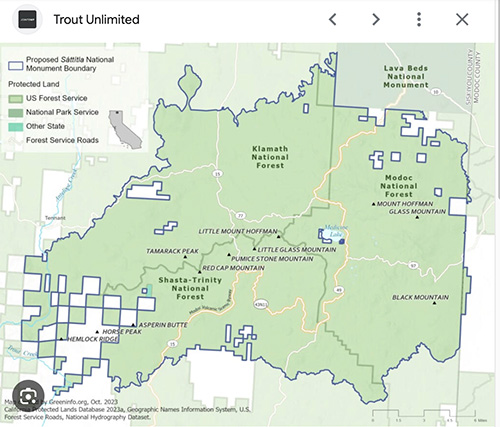
The Sattitla National Monument, also known as the Medicine Lake Highlands, includes lands in the Klamath, Modoc and Shasta-Trinity national forests
By Lee Juillerat for Ashland.news
A newly designated national monument just south of the Oregon-California state line is rallying enthusiasm among tribal leaders and a range of supporters seeking protection for the area.
Shortly before leaving office, President Joe Biden used the Antiques Act to designate the 224,676-acre Sattitla National Monument, also known as the Medicine Lake Highlands, which includes lands in the Klamath, Modoc and Shasta-Trinity national forests.
Designation ceremonies had originally been planned to be formally announced by Biden on Jan. 7 during a visit to Southern California’s Coachella Valley. That trip was canceled because of the raging wildfires that caused the evacuation of thousands of people, destroyed countless homes and buildings and have resulted in at least 28 deaths. Biden signed the declaration during formal ceremonies at the White House on Jan. 14.
California desert land protected
In addition to Sattitla, Biden designated the 664,000-acre Chuckwalla National Monument in Southern California’s Colorado Desert near Joshua Tree National Park.
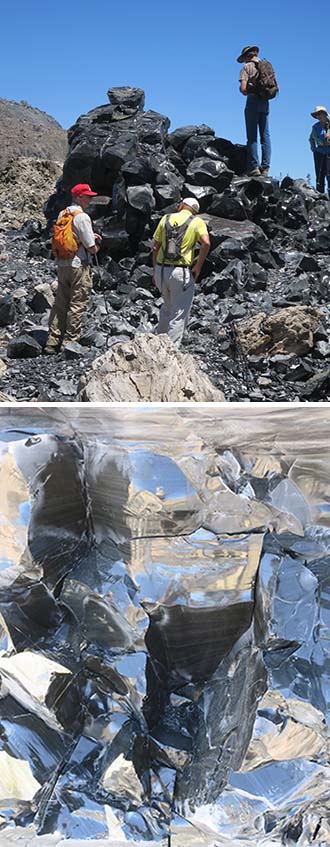
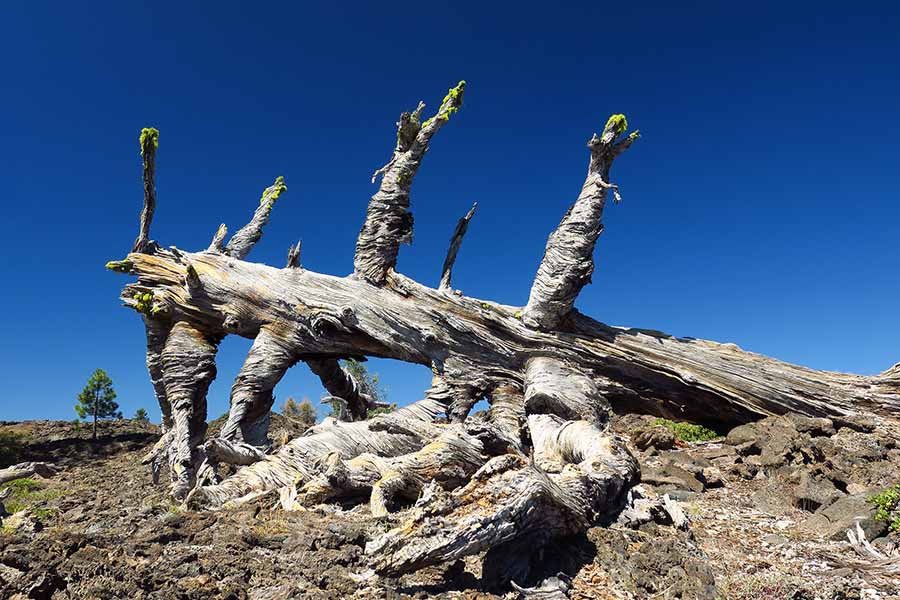
“Sáttítla” translates to “obsidian place” in the Ahjumawi language and refers to the region’s many obsidian deposits that were formed by ancient lava flows. The dormant Medicine Lake Volcano sits in the middle of the monument and covers an area 10 times larger than Mount St. Helens in Washington. Sattitla’s remote location promises visitors some of the nation’s darkest skies and, according to the U.S. Forest Service, is “where distant galaxies and stars are visible.”
The establishment of the national monument sites will restrict mining, solar energy and industrial-scale geothermal development in the affected areas.
Indigenous groups, including the Pit River Tribe, and members of California’s congressional delegation, have long supported the designation. U.S. Sen. Alex Padilla, former Sen. Laphonza Butler and Rep. Raul Ruiz, all California Democrats, co-sponsored bicameral legislation in 2024 to create the monument while also calling on Biden to use his authority under the 1906 Antiquities Act, which allows a president to preserve public land quickly without waiting for Congress to act, to designate both areas.
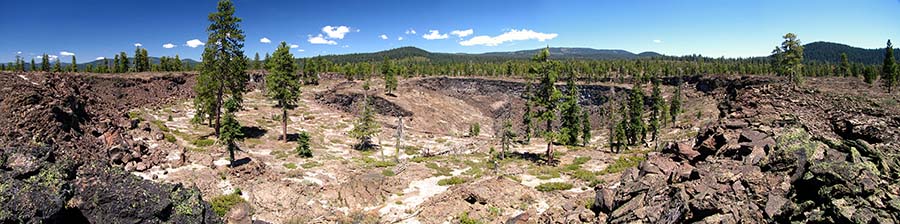
Supporters of the designation call Sattitla a unique geological formation and say its aquifer supports wildlife and supplies fresh water to millions.
Local Rep. LaMalfa opposed designation
The monument designation proposal was supported by a broad coalition of environment groups but was opposed by U.S. Rep. Doug LaMalfa, R-Richvale, Calif., whose congressional district includes the Medicine Lake Highlands.
LaMalfa previously said the designation was not necessary because the area is already protected from development and that forbidding further development would make it more difficult to fight wildfires because of the lack of roads. Last summer he told the Redding Record Searchlight that the designation would mean more regulations and limits on development, saying, “These aren’t the friends of rural California here.”
In contrast, Padilla in April supported the designations, saying, “Our proposal reflects the input of tribal leaders who have fought for years to protect these sacred landscapes, and from our partners in the energy industry who worked with us to carefully craft the monument’s boundaries to ensure we can meet our shared clean energy goals.”
President Donald Trump previously rolled back national monument protections established under Democratic administrations in his first term as president. Trump’s action included reducing the size of Utah’s Bears Ears and Grand Staircase-Escalante national monuments. Biden restored the original boundaries of both monuments in 2021. It is not known how Trump will respond to the Sattitla and Chuckwalla designations.
Included in the Sattitla National Monument is Glass Mountain, a volcanic flow that features areas of obsidian that is also known for areas of Davidson’s penstemon (Penstemon davidsonii) and sticky cinquefoil (Drymocallis glandulosa). Proponents say that despite signage prohibiting the harvesting of rocks, the area shows signs of harmful human impact. “This damage also underscores the urgent need for protection, oversight, and co-management of these lands, ensuring they can be stewarded and enjoyed for generations to come.”
Vast volcanic aquifer
Sáttítla is home to a vast volcanic aquifer that creates an extensive spring-fed system. The permeable volcanic rock allows rainwater to seep beneath the surface and collect in large underground aquifers, which provide water to Northern California communities.
According to California Trout, a group that advocates for clean waters, “This unique geological feature is crucial for adapting to climate change and supporting native species, including salmon, trout and steelhead, many of which are endangered. The area’s ecological significance is matched by its cultural importance to the Pit River Tribe and other indigenous communities.”
The California Native Plant Society supported the designation. Karah Fisher, advocacy and outreach senior coordinator for the group’s conservation program, wrote: “These lands serve as critical headwaters for California, providing clean water downstream for agricultural use and millions of people. The region’s volcanically formed aquifers hold as much water as California’s 200 largest surface reservoirs and feed the Fall River, the largest spring system in the state. This water flows from Shasta Lake all the way south to the San Francisco Bay, making the protection of this vital water resource essential to safeguarding health across the state.”
Fisher cited “a powerful alignment between the priorities of tribal leadership, community members, environmental organizations and the 95,000 others who’ve signed petitions in support of the monument.”
Tribe cites importance of protecting the Sattitla
The Pit River Tribe previously said the designation was necessary, saying, “The tribe’s successful litigation has resulted in recognition that development is inappropriate for these lands and could have disastrous impacts on the underground web of aquifers.” The tribe also said that despite acknowledgment of the region’s importance for both cultural and ecological reasons, “more than two dozen federally issued industrial geothermal development leases have been issued for these unique lands. There are continued attempts by multinational companies to harness resources that experts have said are not economically viable.”
In addition, the tribe has claimed that development “would increase traffic, noise, water and air pollution and would fragment wildlife habitat. Geothermal development in particular would include the injection of hydrofluoric and hydrochloric acids and the release of arsenic, mercury, hydrogen sulfide and other toxic substances into the air that are known to cause cancer or birth defects, the tribe said. That, the tribe said, would turn the remote landscape into an industrial wasteland that threatens a reliable source of pure water for millions of people.
“While lawsuits have been successful in invalidating geothermal lease extensions and halting two proposed geothermal projects, there is a need to constantly defend Sattitla,” tribal representatives said, insisting. “It’s simply not a place for development.”
Email freelance writer Lee Juillerat at 337lee337@charter.net.