Learn the rewards of fostering from local families
By Midge Raymond
“It’s really way more satisfying than you can imagine,” says Ashland resident Angela Decker of being a foster family to more cats and kittens than she can count over nearly seven years.
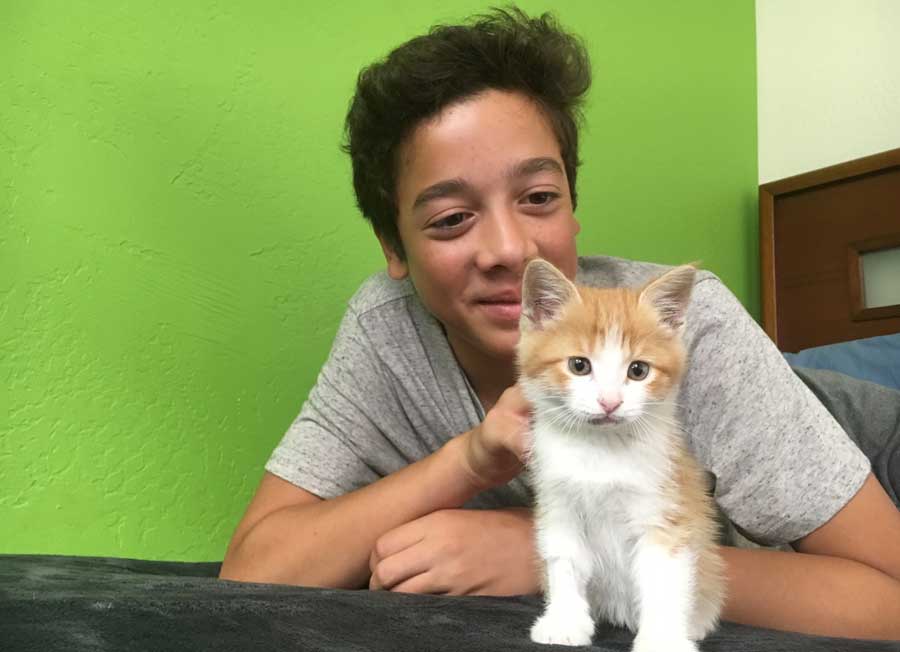
Decker’s family got into fostering when her son Leo wanted to volunteer with Friends of the Animals (FOTAS) at the county animal shelter but was too young. She asked if there was any way the family could help from home. “They said, ‘You can try fostering.’ So that’s what we did, and it was so fun.”
“Not everyone thinks about how important it is,” says Dakota Edney, who fosters kittens for Committed Alliance to Strays (C.A.T.S.) “You are providing a home for these cats that might not be able to get into the program if someone doesn’t have room to take them. It’s that easy. You just provide a home.”
Angela Decker still remembers her family’s first foster kitten — as well as the family negotiation that went along with his arrival. “Leo named him Winston — he was a little orange and white kitty — and my husband is like, ‘Uh-oh,’ because he sees this adorable kitten in the house.” Decker’s husband then presented the family with a contract. “Basically it just said, ‘Promise we’re not keeping any of these kittens,’” Decker says. “At the time we already had one cat. We signed it.”
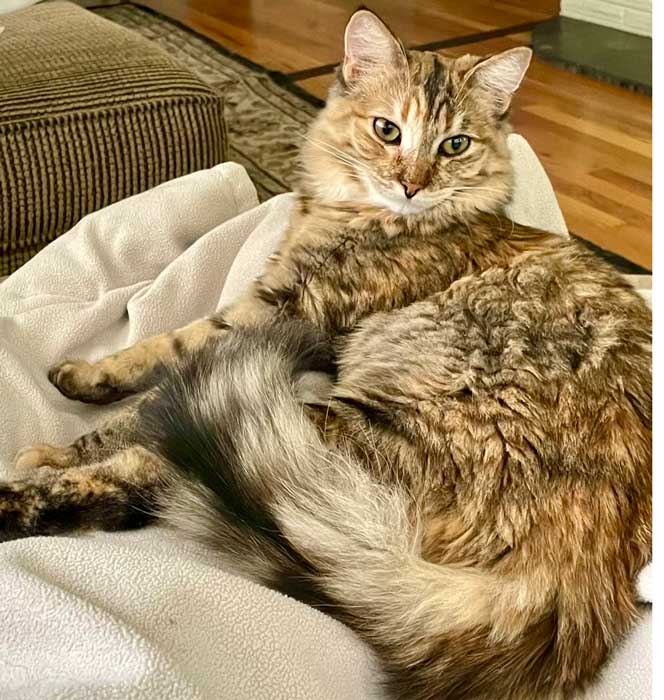
The Deckers had Winston for about six weeks, until his neuter surgery. “Somebody called looking for an orange kitty, and they came over to our house and they met him — a family with a little kid a little younger than my kids. This little boy was just so happy; you could see he’d found his buddy. And there was something about my 13-year-old handing the kitty carrier with this little boy’s new friend in it and saying, ‘Here you go, be sure you give him lots of love, clean water, fresh food, don’t let him outside’ — all the instructions we were given, Leo passed them on to this little boy. From that moment on, we were hooked. Just absolutely hooked.”
For Decker, the rewards of fostering reverberate not only through her family but the community. “I get Christmas cards and every once in a while a postcard from two different families who adopted from us,” she says. “They send us photos of the kitties and give us updates.”
Playing a role in happy adoptions is one of the biggest rewards of fostering. Edney recalls taking in a month-old kitten named Jelly Bean, whose spina bifida caused myriad health problems. “I just remember staying up really late at night with her and taking her to the ER twice. It was really scary.” Edney had Jelly Bean for four months before the kitten was ready for adoption. “Now she lives with her sister,” Edney says. The family that had adopted Jelly Bean’s sister, Kiwi, months earlier had returned to C.A.T.S looking for a friend for Kiwi. When they saw how much Jelly Bean resembled Kiwi and discovered they were sisters, the two were reunited.
Edney, who has been fostering with C.A.T.S. for three years, estimates she has taken in about 60 kittens so far. Due to her experience with “bottle babies” — neonatal kittens who need to be bottle fed every two hours — she often takes in the more challenging kittens. “It’s definitely pretty scary. They’re super fragile, when you get them when they’re really little. You often lose them at that age, they’re so tiny.”
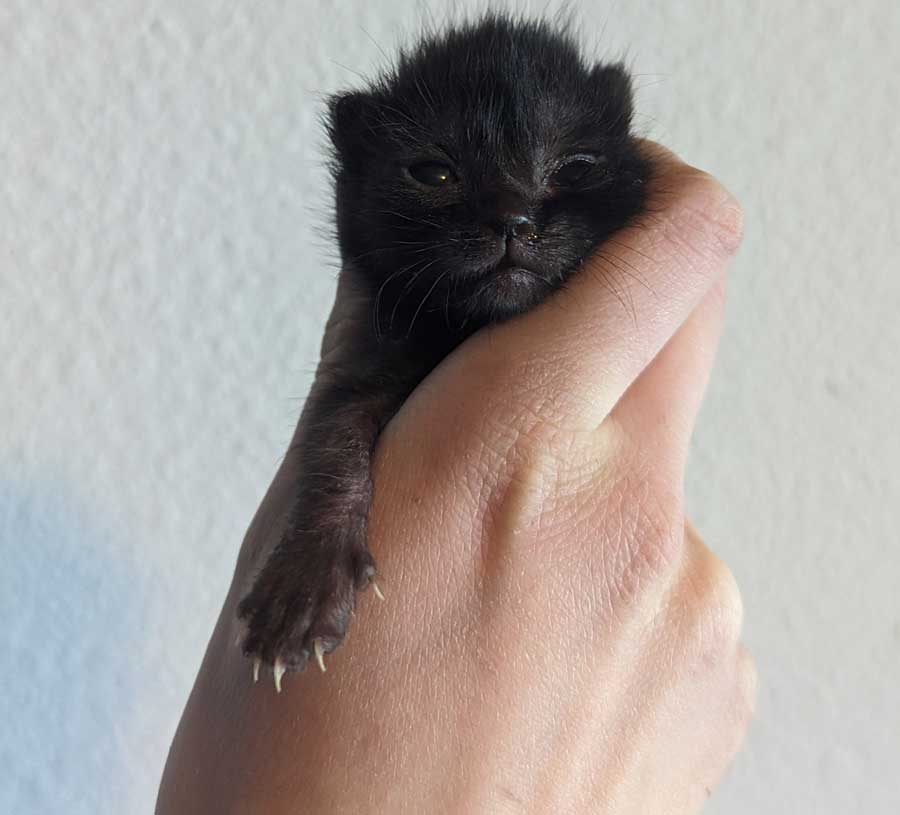
She recommends that new fosters start with cats or older kittens until they have the experience to take on sick cats or bottle babies. At first, she says, “I was really scared to actually get little kittens. I was just worried that I wouldn’t be able to take care of them right. A bigger kitten is a lot like taking care of your cat, but a neonatal kitten is a lot more scary. I definitely learned a lot.”
Decker has taken in sick and neonatal kittens as well and advises, “Just go into it clear-eyed. There were times when, if the kitties were really sick, depending on my time at the moment, I might say, I don’t have the time to take on kitties that are this ill, or I don’t have the time to take on bottle babies at this moment. But when you do have the time or have that bandwidth, by all means. When we had newborns, FOTAS loaned us an incubator and taught us to bottle feed and how to do subcutaneous fluids. Leo and I were taking turns. We were getting up every two hours to feed these kittens. He was really good about it — he’d set his alarm and he’d stagger out of bed and he’d replace me after my two-hour shift, and we just took turns.”
These organizations are seeking cat fosters!
Committed Alliance to Strays (C.A.T.S.)
Friends of the Animals (FOTAS)
The Crowned Cat
SoHumane
Feral Cats Advocacy
For those who think they don’t have the time or space, local rescues will work with you to find the right fit because there are always cats or kittens in need of a temporary home. “I love encouraging people to foster,” Decker says. “A lot of people think they need a big house or a lot of time, and honestly, it’s not that hard — especially if there’s someone else in your household. Even though my husband and my other son weren’t as involved in the fostering, when we were bottle feeding, we were all passing that bottle around, and there was always somebody in the house to keep an eye on the kittens. It just becomes a family affair.”
Another challenge for foster families can be what’s known as “foster failure” — keeping the cats or kittens you’re caring for. And it does happen. Despite having a written contract, Decker says, “We did end up keeping one of our fosters.” And, she adds, “It was my husband who broke the contract.”
For Edney, what keeps her fostering despite taking on the most difficult cases is “definitely the need. In our area, there’s a lot of stray cats. Now it’s kitten season, so we really need the support in fostering right now because all of these little babies are coming in. C.A.T.S., or any shelter, can’t just take all of them. They have to have space for them, so fostering is really a great way to help out your shelter — and to let those cats live in a house instead of in a cage while they’re waiting to be adopted.”
“It really is a wonderful thing,” Decker says. “It’s so satisfying, it’s so heartwarming, especially when you see these kitties getting that home they deserve, and you see these families that get the new little family member they deserve.”
Learn more about fostering and what local rescue organizations are looking for in our last column.
Ashland resident Midge Raymond is co-founder of Ashland Creek Press and author of the novels “Floreana” and “My Last Continent” and co-author of “Devils Island.” Email suggestions and questions for Catty Corner to her at CattyCornerAshland@gmail.com.