Experts from the University of Oregon offered generally good news about wildfire risks for the West but uncertainty for Northwest
By Alex Baumhardt, Oregon Capital Chronicle
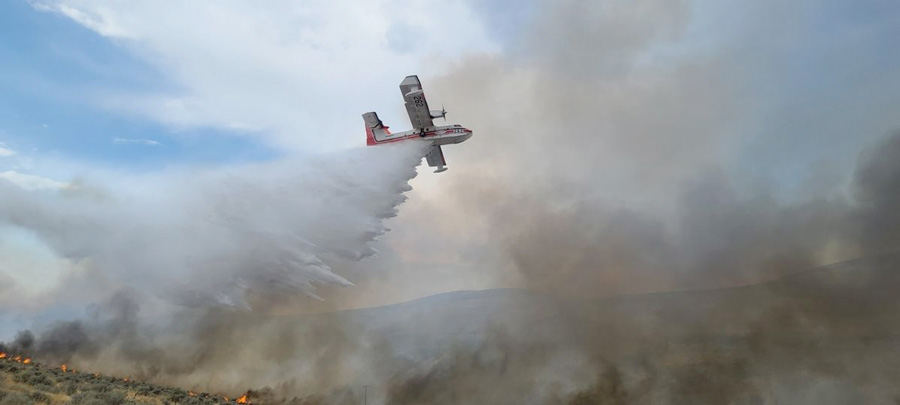
Oregon’s getting better at preventing and responding to wildfires, experts said Thursday, but much more still needs to be done.
A panel of University of Oregon professors who study climate change, smoke and wildfire discussed the 2024 wildfire season in an online forum with journalists as the West braces for summer fires.
Wildfire risk in the West and in Oregon this year is not abnormally higher than in recent years, said Daniel Gavin, a professor in the geography department who specializes in paleoecology — the study of climate change impacts and fires on ecosystems over time.
Snowpack across Oregon is about average, and it’s been an El Niño winter and spring, meaning conditions have been wetter than normal. Gavin expressed concern that parts of Washington are still abnormally dry, and that snowpack is melting too fast in some parts of the Northern Rocky Mountains. With greater precipitation and snowmelt, grasses and other vegetation in open spaces can grow quickly. A stretch of hot summer months could dry it out just as fast, creating tinder for a wildfire.
“It doesn’t take many weeks of dry weather to create fire hazards in more open vegetation on the east side (of the Cascades) or in previously burned areas,” Gavin said.
Fortunately, the number of cameras monitoring high risk areas around the state have grown from several hundred to roughly 1,200, said geophysicist Doug Toomey, a professor who also leads a regional partnership for wildfire prevention and monitoring called the AlertWildfire camera network.
And communities across Oregon and the West are improving communication systems for evacuations, said Amanda Stasiewicz, a social scientist focusing on policy and human impacts of wildfire, as well as forest and rangeland management.
Stasiewicz said utilities across the West are developing better plans and faster processes for deploying public safety power shutoffs, which allow them to deenergize part of the electric grid during bad weather conditions where there’s a high risk electric infrastructure could start or contribute to a wildfire. Fires started by power lines and electrical equipment accounted for more than 59% of the total acres burned in California wildfires during the summers of 2017 and 2019, according to Stasiewicz.
Still, there’s more to be done, she said, especially to support rural community preparedness and to prepare for wildfire refugees who will need more support under a future of longer and larger fires, fueled in part by drought and heavy winds that are predicted to increase under climate change.
The increase in wildfires started in or exacerbated by extreme wind events has grown, making electrical power shutoffs more common and making wildfires harder to predict, Stasiewicz said. All of this means it’s more difficult for state and local agencies to communicate with impacted Oregonians and to know when to order an evacuation.
“Even the risk avoided by deenergizing the grid has different impacts to different communities,” she said.
Many people get evacuation notices through cell phone messages or apps. In rural communities, where many use Wi-Fi to send and receive messages due to spotty signal coverage, losing electricity could completely cut them off from life-saving alerts.
Heidi Huber-Sterns, a research professor and expert on the public health impacts of wildfire smoke, said power shutoffs can also trap people in unhealthy conditions. Keeping windows closed because of smoke while also losing the electricity needed to run air conditioners and air filtration systems can exacerbate health issues.
Huber-Sterns said there’s more to be done regionally to address the threat of wildfire smoke, calling cross-state collaboration “a missing piece.”
Alex Baumhardt has been a national radio producer focusing on education for American Public Media since 2017. She has reported from the Arctic to the Antarctic for national and international media, and from Minnesota and Oregon for The Washington Post.