
First in a series of 10 articles about what you can do now to prevent disaster later
By John Scarborough
Ninety percent of the homes and businesses that were destroyed in wildfires caught fire from airborne embers, which are known to travel as much as 5 miles. Wildfire itself can travel faster than a firetruck.
You might think we don’t have a chance against wildfire, but you and your neighbors can do a lot to protect your home and neighborhood. Communities can greatly reduce homeowners’ risk by undertaking joint projects like removing high, dry grass from adjacent fields, by pulling out blackberry bushes from ravines and dry riverbeds, etc. You can move a woodpile that’s too close to your house; you can repair broken shingles on your roof; you can clear gutters that are stuffed with dry leaves.
‘Clean Up Your Green Debris, Be Fire-free!’
The 12th annual free green-debris drop-off days is set for 8:30 a.m. to 3:30 p.m. Saturday, April 27, and Saturday, May 11, at the Valley View Transfer Station, 3000 N. Valley View Road, Ashland. For details, click here.
You can apply to the city of Ashland for a free wildfire risk assessment and report. A certified assessor will walk around your property and point out situations and areas that are vulnerable to wildfire. Even though the city won’t make the repairs and adjustments (there are more than 7,000 houses in Ashland), you can do them yourself, or find someone who can help.
But first, take a slow walk around your house and yard, looking for areas where embers could start a fire. This series of articles will show you what to look for, and what you can do about it. (For fire-resistant plant selection and landscaping, check out “Firescaping Your Home”by Adrienne Edwards and Rachel Schleiger.)
Start your inspection with Zone 0 (the 5-foot-wide area of ground immediately adjoining your house). It’s called “Zone 0” because it is the area of highest priority. To minimize any paths that fire can use to reach your house, and reduce embers’ access, keep this strip free from anything combustible. That includes wood mulch, woodpiles, wooden flowerpots, construction materials, grass, and wooden fences, as well as any plants. Some plants are more flammable than others; in Southern Oregon, any plant’s flammability puts your house at risk.
Even though mulch is often the ground cover of choice in our area, the trouble with mulch is that all varieties are flammable. The least flammable is composted wood mulch. Mulch made from rubber is the most flammable. Rock (e.g., decomposed granite, gravel, cinder, pebbles and the like) is not flammable and can be artistically arranged.
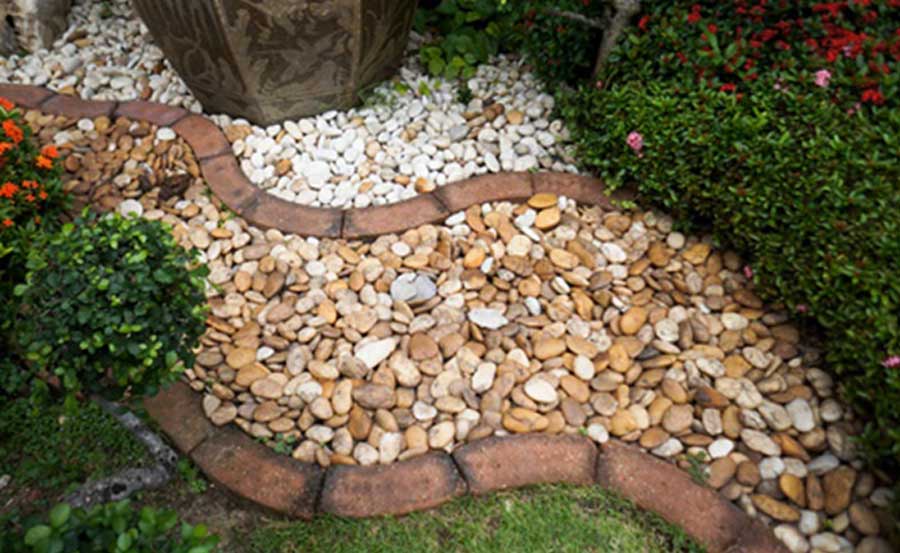
Take a look at where the ground meets your house. Be sure that the materials used in the first 6 inches at the base of the wall are non-combustible. Common non-combustible materials include three-coat stucco, concrete, metal siding, and fiber cement siding. If embers can work their way under the bottom-most plank of siding, fill the gap with non-flammable caulking.
Beyond Zone 0 is Zone 1, which adds 25 feet to Zone 0’s 5 feet. The focus here is on “lean and clean” plant placement, breaking up fire paths by separating vegetation groups, eliminating ladder-fuel effects of bushes, shrubs and grasses sitting directly beneath low-hanging tree branches, and using non-combustible groundcover in stream-like patterns. Wood fences and decks, which will be covered in a separate article, are also fire paths.
Throughout the fire season, do regular maintenance: Gather and dispose of leaves, pine needles (which are also leaves), small branches and other debris. Small branches produce more embers than limbs. While you’re at it, remove any debris that has collected on your roof, decks and stairs. Fences, which we’ll consider separately, can gather a lot of debris at their base. Check the interior of shrubs, bushes, and large grasses for debris.
Next week: Roofs, decks and patios.
John Scarborough is a member of the Fire Adapted Ashland Committee, where he works on the Wildfire Risk Assessment Program (WRAP), which at an Ashland resident’s request will perform a wildfire risk assessment of the resident’s property (click here to go to the request form). Email Scarborough at jscar.ashland@gmail.com.