Curb the behavior that drives people to seek refuge
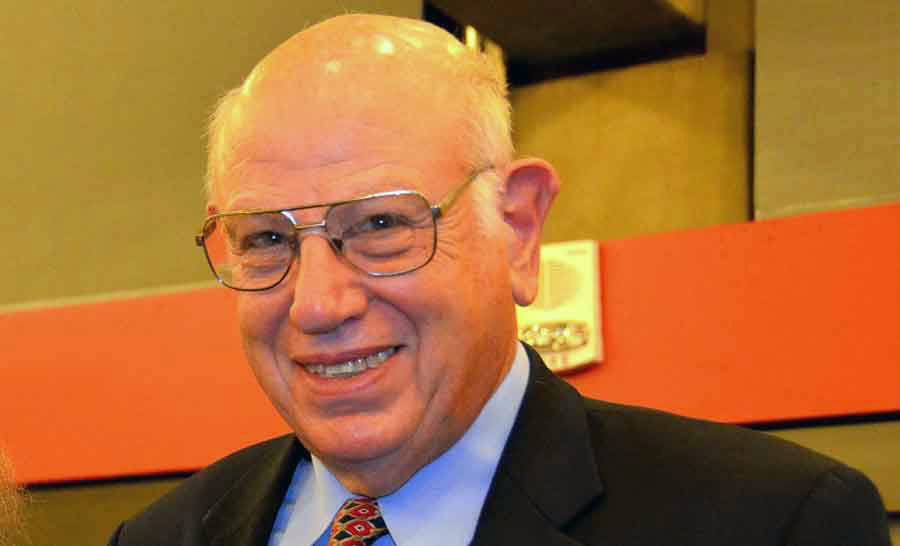
By Herbert Rothschild
Because the news media confine their reporting to what’s happening now, when a flood of refugees from Haiti washed up at Del Rio, Texas, in September, they gave us the sketchiest understanding of why that happened. The incoherence of the Biden Administration’s response suggests that it, too, can’t form a coherent understanding despite having access to personnel with knowledge that goes beyond the only events even the best mainstream news programs cited as causes — the then-recent earthquake and the assassination of Haiti’s president.
Donald Trump handled the challenge of immigration across our southern border appallingly but with consummate political skill. Unless a president is willing to imitate Trump, which Democratic presidents can’t afford to do politically even if they have the stomach for it, they cannot successfully handle the challenge. Not unless, that is, they acknowledge and curb the behavior that drives people to seek refuge in the very nation that is the primary cause of their misery.
I developed this argument in regard to Mexico when I was publishing Relocations in the Daily Tidings. I pointed to the subsidized U.S. corn that poured into Mexico when NAFTA created the Canada-U.S.-Mexico free trade zone, which turned Mexico’s small farmers into landless laborers. I also mentioned our insatiable demand for recreational drugs and our refusal to repudiate the hypocritical policies that have created a narco-nation across our southern border, with its pervasive violence and corruption.
Historically, however, the U.S. has rarely been able to control Mexico directly. Not so Central American nations like El Salvador and Honduras, or Caribbean nations like Haiti and the Dominican Republic. Our military interventions and occupations as well as our covert operations — all aimed at securing their resources for U.S. corporations and banks — have been so frequent that I can’t enumerate them here. (Check out the list posted at yachana.org/teaching/resources/interventions.html.)
So, let’s just focus on Haiti. The most blatant act of control was our invasion in 1915, the start of a military occupation that lasted until 1934. We instituted a Marine-run regime operating under martial law. Resistance was suppressed with executions and torture. Hundreds of thousands who were forced into near slavery died working on large infrastructure projects. At least 260,000 acres were stolen by North American corporations. Most Haitians lived in dire poverty while the U.S. allowed a small minority, French-cultured mulatto Haitians, a share of power and wealth.
The invasion and occupation were carried out largely at the behest of National City Bank, which had acquired investor control of Banque Nationale de la République d’Haïti, Haiti’s only commercial bank; Banque Nationale also served as the national treasury. Shortly after the invasion, Marines seized Haiti’s gold reserves and sent them to National City Bank’s New York headquarters. As if that weren’t enough economic control, U.S. government representatives took over management of Haiti’s customs houses and administrative institutions. Forty percent of Haiti’s national income was dedicated to repay debts to American and French banks.
When FDR, the only president to repudiate U.S. imperialism in Latin America, ended the occupation, the U.S. left a modernized Haitian army to do its dirty work for the next several decades. We supported dictators like “Papa Doc” Duvalier and his son “Baby Doc,” but not leaders who wanted Haiti’s resources to serve its people. In 2004, we again invaded to remove Bertrand Aristide, the democratically elected president.
Our forcible domination of Haiti and our blatant theft of its wealth are among the worst injustices we’ve perpetrated in Latin America and the Caribbean, but the differences are of degree, not kind. The only constructive proposal put forward to stem the tide of migrants to our southern border is to help their home countries develop economically. This help is spoken of as aid, but if people knew the history I’ve just recounted, such help would be regarded as reparations.
No U.S. administration, however, is going to own up to that history, because we want to keep doing those same things in the present. Demanding an end to cruel treatment of people who arrive at the border will count for little unless we demand an end to our cruel treatment of the general populations of the countries they’ve fled. Comprehensive immigration reform will never be comprehensive if we don’t reform our conduct in the hemisphere.
Email Ashland.news board member and columnist Herbert Rothschild at herbertrothschild6839@gmail.com.