Shifting climate means shifting suitability for wine varietals
By Alan Journet
Most Rogue Valley residents involved in agriculture and forestry know that their future success depends on the climate. All plants require the climatic pattern in which they have succeeded historically. Substantial deviations from these conditions result in depressed growth and yield.
Historic patterns and projected trends in regional temperature and precipitation, reveal potential problems. This discussion focusses on one of my favorite attributes of our region: wine varietals.

Internationally known wine terroir expert Dr. Greg Jones (former Southern Oregon University professor, now back with his family Abacela Winery in the Umpqua Valley) has studied the optimum growing season temperature of wine varietals important in Oregon’s wine-growing areas and produced the graph depicted here.
The historical (1981-2010) average temperature for the grape growing season was 58.1 degrees in Jackson County and 60.1 in Josephine County, appropriate for varietals towards the upper left of the graph. The business-as-usual climate projection scenario assumes we continue the current trend in accelerating use of fossil fuels and greenhouse gas emissions.
These projections for 2050-2074 are nearly 64 degrees and 67 degrees for Jackson and Josephine counties, respectively. By 2075-2099, these values reach 66.6 and 68.3, respectively, indicating a climate more suitable for the varietals on the lower right of the chart, with a worst-case future climate suitable for table grapes and raisins.
If we manage to lower the emissions trajectory substantially, we should find these counties experiencing less severe warming. By 2050-2074, Jackson will likely reach 61.5 and Josephine 63.8. Then, by 2075-2099, Jackson becomes 62.7 and Josephine 64.6, above the 1981-2010 baseline. This lower trajectory indicates the Rogue Valley climate would be appropriate for varietals in the mid-range of the chart.
Another climatic challenge is the shifting water availability pattern. The Oregon Climate Change Research Institute projects summer growing seasons becoming drier, with winter snowpack also declining. This will further compromise summer stream flow and irrigation water availability. In addition, the threat of extended droughts and heat waves poses an extreme weather threat while the smoke from wildfires adds a further complication.
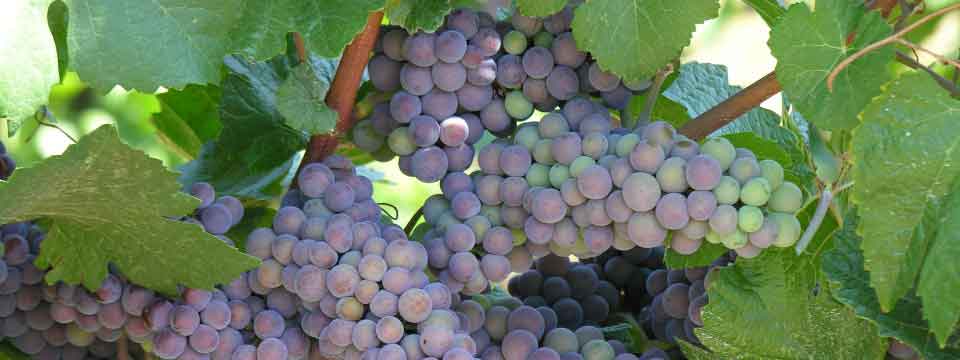
How are regional winegrowers responding to the dilemma? Jones suggested that “growers have historically made pretty sound decisions about what to plant that fits the climate.” This explains the local prevalence of Intermediate and Warm season varietals.
In terms of acceptance by winegrowers of climate science, the majority of those I polled accept it and have been following projections for 15 to 20 years. These growers have been adjusting their management accordingly, in terms of irrigation at South Stage Cellars and Troon. Troon, meanwhile, also became Demeter Biodynamic and certified in regenerative agriculture. Additionally, the climate-conscious growers are aware of climate adjustments across the U.S. and globe and are themselves adjusting to warmer climate varietals or moving plantings to higher, cooler elevations.
Meanwhile, some growers contacted reject climate science. They feel they cannot predict what climate change will bring to their vineyard and, therefore, adopt a fluid response to varietal planting based on trial and error.
It is notable that wine varietals are no different from other agricultural or forestry species in their dependence on climate. The projected climate trajectory will have parallel impacts on all agriculture and forestry. Regional land managers who haven’t already done so, should consider researching local climatic projections and the optima of their chosen crops and plan accordingly.Many of us express the hope that the climate will soon return to normal. Normal is a climate concept we can consign to history; the key is what the trend is, and what that trend indicates for the future.
Email Jacksonville resident Alan Journet, board president of Southern Oregon Climate Action Now (SOCAN), at alanjournet@gmail.com. A version of this article first appeared in the Applegater newsmagazine.